Undercover Editor: One Day Sales Assistant
We present to you a new format of articles - “Undercover Editor”. Within the framework of this format, the authors of the Shoes Report, not just in words but in practice, will test the various occupations and professions of the shoe industry, and share with their readers their views on them from the inside. To begin with, our editor-in-chief Olga Sevastyanova worked all day as a sales assistant in the Moscow shoe store Le Bunny Bleu and told the whole truth about her experience.
February 5th, 8:00 AM. I woke up like the night before an exam. I remembered I wouldn't have to go to the gym today, because in an hour I'm leaving for a special assignment: I'll be working the entire day as a sales assistant at Le Bunny Bleu. I discovered this American brand by chance, and if I were 17, I would have bought half the store right away. Le Bunny Bleu shoes are distinguished by their very fresh design, delicate colors, and the unabashedly childish style that has made this brand popular in Asia. In Russia, Le Bunny Bleu shoes should probably be worn by the most fashionable girls under 25—but only if they can find a store at all: so far, there are only two in Moscow: one is a franchise in Korolev, near Moscow, and the other is in Bryansk. There is, however, a fairly successful online store. I met Victoria and Alena, the owners of the Russian office, last fall, and they immediately struck me as people who weren't in the shoe business. This turned out to be true: the women had previously distributed a jewelry brand with unusual designs, and after seeing Le Bunny Bleu stores in New York, they were inspired to bring the shoe brand to Russia. Their lack of close contact with the footwear industry not only doesn't hinder them, but, in my opinion, makes their business more modern. At least, I've only encountered such genuine openness, a willingness to show them everything, tell them everything, and even invite a journalist to work in the store for a day once before. I simply couldn't resist such a tempting offer, and today I'll try to fully immerse myself in the profession of a sales consultant.
10:03 AM. I walk into a nameless shopping arcade next to a business center on Krasnoproletarskaya Street, which is on Novoslobodskaya Street. The surrounding area is lined with market-style clothing stores, jewelry stalls, and lowered blinds. The glowing bunny ears—the Le Bunny Bleu logo—look odd against this backdrop. The shop is already open. In the back, between the shelves and the windows, Alena, Victoria, and the franchise manager, Natalia, are sitting at their computers. I say hello and proudly show off the funny shoes I brought from home: brogues the color of cream and juicy strawberry bubblegum. I really like them, but because they look a bit clownish, I usually don't have anywhere to wear them. This time, it was just the right opportunity, because all of Le Bunny Bleu's shoes are designed in the same style. In these brogues, I'll look just like a salesperson at my store. Incidentally, the only one: Seryozha, a drama school student, used to work as a consultant, but he's gone now. It turns out a salesperson can be an actor, but an actor can never be a salesperson.
10:20 AM . Alena leads me around the small store, explaining materials, prices, and how to convert American sizing to Russian sizing—just add 3 before the number on the label. The store is currently running a special offer for the brand's followers on Instagram, Facebook, and VKontakte: all sneakers are 2200 rubles. "We realized that simple pricing works best," Alena explains. "Previously, we'd announce promotions like '50% off all UGGs,' but it didn't generate much interest. But when we announced all UGGs were 2500 rubles, customers started buying them en masse—for themselves, their friends, and their families. We decided to do the same with the sneakers." I write down the price of the sneakers in my notebook and make a note that it should only be offered to those who specifically inquire about the promotion.
10:30 AM . Alena recommends taking advantage of the morning lull and memorizing which shelves hold the shoe part numbers. "Is there any logic to the way it's stored?" I ask, recalling the gigantic Otto warehouse, so logically arranged to the point of impossibility. "There's no logic," Alena replies, "but after a day or two, you memorize everything." I only have a day—ideally, just a couple of hours before the full onslaught of customers—so I decide to jot everything down in a notebook. This has never failed me. The store has four wall cabinets, one island table, and a couple of display areas near the checkout. I pick a shoe from the top shelf of the very first cabinet and try to find its part number on the shelf. It's not easy, although you can navigate among two or three hundred boxes by their color or shape. Going through all the labels on the boxes looking for just one takes about two minutes. I won't be done for a while.
11:45 AM. I've finished sorting through the product numbers on the third wall cabinet, and my head is a complete mess. It's absolutely impossible to remember where, for example, those leopard-print toe shoes are. I helplessly glance at my notebook—practicing in front of customers, of which there haven't been any yet. Behind the shelves, the girls are discussing whether it's appropriate to have such bright lighting in a Chinese shoe store. They conclude it's not worth it: why highlight flaws that won't be visible in natural light anyway?
11:55 AM. The first customer has arrived! I greet her with utmost confidence. It's a thirty-year-old woman in office attire, obviously an office worker. She approaches the last closet and is clearly interested in those... Oh no, I haven't yet managed to find out where those boots are! Not those, take the other ones, to the left, please! "Do you have a size thirty-eight?" she says, looking at me. "Yes, of course, we'll find it right away," I reply, not so confidently. Alena emerges from behind the rack. Trying not to undermine my authority (hmm...) as a salesperson, she quietly gestures toward the boxes. It doesn't take me long to find what she needs in the stack and bring it to her. She really likes it, but she was actually on her way to run some errands and will be back later.
12:30 PM. Two well-groomed women in fur coats enter the store. Apparently, a mother and daughter, a "girlfriend" type. They touch the Ugg boots standing right by the entrance. I remember the instructions for greeting customers and say, "Hello! Are you looking for something specific?" The mother replies, "Yes, we need something warm to wear with our sweatpants, so we don't get cold in the mountains but also something that looks good. We're going to the Olympics." Now it's clear who's making the decisions here. I show the mother a pair of black semi-sporty boots. "No, she has blue pants, she needs something blue," the mother objects. The daughter is silent, examining the shelves. "Well, you don't necessarily need matching shoes with blue pants," I point out, immediately feeling like I've made a mistake. My mother's eyes suggest I'm hopeless when it comes to style, and she weakly counters, "No, how could it be otherwise..." Well, we have blue Ugg boots especially for you—high, short, and with a cuff. While my "girlfriends" discuss the height, I try to remember which shelves the boxes with all these items are arranged on. However, no matter what I bring, nothing fits. Ugg boots still aren't glamorous enough for a decorative tracksuit. After trying on three pairs, my mother leads her daughter out of the store: "Maybe we'll check out some duvets at Adidas..." I say goodbye to the customers and say hello to the athletes. Victoria peeks out from behind the rack: "Did they really not buy anything?" She looks surprised. And I don't think it's surprising: satisfying such a very specific customer request is practically impossible.
14:30 PM. In the past couple of hours, a man with the demeanor of a security guard, carrying a bag of persimmons, and three elderly women of varying sizes—from the pharmacy next door—have stumbled into the store. You might have dismissed them as customers, but they were moving too determinedly toward the back of the store and were clearly looking for something specific. One of them wanted slippers—"so I could slip into them in the morning and run around all day"—but when I showed her the original retro-style felt slippers, she laughed, "I don't even want those for free!" So, while young people scour flea markets and snatch up anything inspired by the design of the past, pensioners are literally allergic to Soviet-style items.
15:00 PM . I'm the only one left in the store; everyone else left for lunch about twenty minutes ago. It's a good thing I've already eaten, otherwise I'd be completely alone. A woman, another business center employee, rushes past the display case. At the last moment, her eyes catching something in the window, she reverses like a car and flies through the door of the store. It turns out she's been attracted by a pair of boots on a shelf by the glass. "The color matches my coat perfectly!" she exclaims, twirling the pair in her hands. A ticker starts ticking in my head: "Eco-leather is actually genuine leather, just specially processed, how exactly is it pressed, and it also has a flexible sole. The left shelf is somewhere in the center, probably the second or third shelf, I can't remember exactly, I'll have to look it up in my notebook." At the same time, my voice rings out: "Want to try them on?" I hear in response: "Oh, no, I don't have time now. I'll wait for the sale!" Now I understand the shoemakers who complain about customers constantly demanding discounts. A pie in the bush is worth a bird in the hand.
15:10 PM. I sold my first pair! Oddly enough, they turned out to be the same boots the bargain hunter was looking for, only in black. However, this business center employee, who had run out for a chocolate bar but wanted to put on some shoes, was hesitant between colors. To convince her that black boots with a black sheepleather coat would look better than brown ones, I even offered to let her try on my sheepleather coat. What lengths won't you go to make a sale! "Just like mine!" the woman rejoiced, diving into her furs. "It really does look better with black." That's how Alena found us, returning from lunch earlier than the others. She helped swipe the customer's card through a compact card reader connected to a smartphone. I'd seen these things on industry forums, but I didn't think any shoemakers were using them yet. After the shopper continued on her way to buy a chocolate bar, I shared with Alena my observation that the boots next to the display case attract a lot of attention these days. "That happens a lot," Alena says. "It's a ripple effect. At first, they're interested in one particular model, and then suddenly they lose interest and start aleatherg en masse about another."
16:00 PM . Three hours until the end of the workday. I'm honestly bored: there aren't many people here, although the girls say it's just that way today for some reason. I don't allow myself to sit down; I stand behind the counter, shifting from foot to foot. A girl I go to the same gym with walks past the store. She doesn't glance at Le Bunny Bleu. I wonder what she'd think if she recognized the saleswoman as a fellow member of that expensive gym. Behind the shelves, Natalya talks about her friends who run a shoe store in Sochi. They were hoping for a big profit during the Olympics, but so far there have been surprisingly few customers. The student volunteers who have come to town aren't planning on buying anything, and the wealthy have settled in Krasnaya Polyana.
16:10 PM. I see a woman with her 17-year-old son. She came into the store ten minutes ago and, like many, promised to return. And she has! She apparently really liked the ankle boots that the morning "Olympians" had underestimated. "So soft, oh so soft!" she mutters, hovering in front of the mirror. "So, what do you think?" she asks her son. I don't interrupt. I know that when a person comes with someone, they don't need the salesperson's advice. "Mom, if you like it, take it." What a wise young man. "I'll take it!" the woman blurts out and, quickly taking off her shoes, hurries to pay for the purchase. While I fiddle with the mini-cash register, I reflect on how the time between making a decision and paying is minimal for people who are truly committed to buying. I remember Alena's story about a customer at the Le Bunny Bleu store in the Golden Babylon shopping center. She'd been looking at 990-ruble ballet flats several times that day, couldn't decide on a color, wasted about two hours of the salespeople's time, and still hadn't bought anything. It's a good thing I didn't have any of those today. I handed her the receipt, thanked her for her purchase, and wished her pleasure. "Absolutely!" the woman replied. "Soft, oh so soft! Thank you so much! Life is good!" After she left, Victoria asked, "So, Olya, have you changed your mind about our target audience?" Indeed, she had, and radically so. All day long, not a single woman under 20 appeared in the store, and the real customers were mostly women over 30.
17:10. A short-haired woman in spacious trousers, a burgundy sweatshirt with a hood and sports boots taxied into the store. Almost from the threshold, the shoe begins to be touched, picks up a shoe, ideally suited to her style, admires. I understand that her heart has already melted. It remains to convince to try on shoes, and the point is in the hat: as soon as a person sees the thing he likes, he already psychologically considers it his own and is unlikely to be able to leave without a purchase. To my proposal for fitting, the woman replies that, in fact, she goes on other matters, and there is no time to linger. Will come next time. I have often heard this, but this time it's hard to believe your ears: the woman is clearly not in a hurry to leave the store. She dreamily examines the layout, picking up one or the other half-park. “Oh, what a bunny! She suddenly says, pointing to a knitted toy sitting on a shelf. “My girlfriend does such a thing.” The hare is sitting here for a reason. It is a typical emotional component that improves the quality of merchandising at times, which I immediately became convinced of. “And you know,” a visitor addresses me, “why will I ride several times?” I have two thousand rubles with me. Let's try on those shoes! I have the 37 size, but bring one smaller. ” While I get my shoes out of the boxes, the woman tells me that she messed up her legs, because she wears shoes one size smaller all her life in an effort to visually reduce the foot. As a person with a foot of 41 size, I am out loud surprised: okay, I can’t find beautiful boots for myself, so I spoil my legs in 40, but when a person with the most popular shoe size dooms himself to voluntary torment! We both sigh in solidarity. A woman climbs into a boot.

- Do they have an orthopedic insert?
“No, and there shouldn’t be in mass production shoes,” I retort vigorously, at the bottom of my soul a little doubtful of my innocence. Still, a little support of the foot would not hurt. - Orthopedic insoles should be prescribed by a doctor, otherwise they will only harm.
- Yes, I have one because my back hurts. Only I do not wear them.
- And with these boots you will just wear! And the back will hurt.
The reception of persuasion works, the woman actively agrees. He probably already sees himself in beautiful shoes and with a healthy back. Nevertheless, he wants to measure another size, smaller. No problem. But the 37 size shoes are too loose, and in the 36,5 size version the inner loops are rubbing their feet. What to do?
- I don’t even know which ones to take! - the woman sighs. Her whole appearance calls me to act as not only a salesperson, but also a consultant.
“Let us reason logically,” I am well performing the role of a person whom you can trust. - In 36, the belt loops, and you can’t insert the insole. Moreover, you say that your fingers abut. Maybe stop torturing your legs? And in 37 you can put an orthopedic insole, your fingers feel free, there will be no problems with the toe, and the loops do not rub. Everything speaks for 37 size!
- Yes indeed. And they don’t look like skis on me?
- I think not!
- Well then, I'll take the 37.
We go to the checkout. A woman sees a bouquet of roses on the table, jokes: enthusiastic buyers gave? We are laughing. “Thank you very much, I'm so glad I came to you! Yesterday I crashed the car, there was no money, but here at least some joy. I have to bring a girlfriend, and the fact that I have it, poor thing, is so badly put on shoes. " Filling out the form for a discount card, I find out that our customer is 55 years old. She is a little shy of her age, but I hasten to please her with a compliment: "You know, for your age you are very stylish." She is pleased to hear, the smile becomes even wider. Having wished the customer all the best and hoping to see her again, I reflect on how strange the process of a good sale looks like: people give you their money and thank you for that.
18:55 PM. Nothing noteworthy had happened since my last purchase. Only a timid woman came in, attracted by the brightly colored Ugg boots, but wanted to try on some ballet flats. She didn't buy anything, but I'd already had enough of the day. I recalled its highlights and my observations. First, I'd often heard how bad it is when salespeople primarily offer their favorites. But I didn't expect to be so easily able to suggest leather boots I'd liked to customers in response to their request for "something for the spring/autumn season." Second, I recalled my magazine interviews with top salespeople: some of them talked about the importance of honesty in the sales process. "When I see that these shoes don't suit a customer, I won't tell her what really suits her." Having worked as a salesperson, I realized I couldn't agree with this "secret to success." People's tastes vary so widely that, as a salesperson, I have no right to judge them or offer style advice, especially if I'm not asked or the customer is happy with her choice. Thirdly, being honest is difficult in general, especially as a salesperson. Sure, you could warn the customer that these shoes will constantly come untied because they have round laces, or that that crease in the insole is truly a flaw and not an engineer's oversight. But why bother? Wouldn't it be better to share your observations with buyers so they could communicate with suppliers? Maintaining honesty in a situation where you can't change anything and are solely responsible for the shortcomings of all higher-up departments is not only difficult but also harmful. So, salespeople end up concealing negative aspects from customers due to their own powerlessness, and customers become disillusioned and lose trust in the entire brand. But, incidentally, this isn't always the case. During my day as a salesperson, I realized that many customers, especially women, aren't particularly interested in the functional merits of shoes. What's more important to them is outstanding design, unlike anything else, and brands that can distinguish themselves from thousands of others in this way have a strong competitive advantage. This is exactly what I tell Alena, Victoria, and Natalia as I leave the store, and I sincerely wish Le Bunny Bleu continued success. Tomorrow, I return to the editorial office, and this thought warms my heart: visiting is nice, but home is still best.
We increase the redemption of goods in the online store
Multi-channel sales model. Shoes go online to support traditional retail
Does an online store need omnichannel?
Making the right diagnosis. 10 ways to quickly identify your customers' "pains"
Technology Selling Issues
 Shoes Style and its Discoveries. An Interview with Anton Bazylev, Prize Winner of the International Shoe Design Competition
The international shoe design competition Shoes Style, held in Moscow this year, showcased many interesting footwear and accessory collections. Shoes Report recently published a story about the winners—third-year students from Kosygin Russian State University, Margarita Skvaznikova and Egor Lysov, who presented their "Retrospective" shoe collection at Shoes Style.
 ICEBUG at Euro Shoes: Swedish Innovation in Grip Technology
ICEBUG is a Swedish company steeped in innovation and creativity. Our rapid growth is a result of our expertise in grip and technology. Since its inception, ICEBUG has been creating footwear with superior grip and is always striving to improve grip even further.
 KV+ will present versatile sneakers for both sports and urban wear at Euro Shoes.
The Swiss brand KV+ is not so well known to the general Russian audience, but it is well known in the world of skiing, because it was there that KV+ took its first steps and actively developed. The Swiss brand has earned the trust of the professional sports audience over the past 35 years. At the same time, the Russian sports market of ski equipment has always been a priority for the Swiss.
 Rieker and Remonte are regular exhibitors at Euro Shoes: meet your favorite brands at the exhibition from August 25 to 28 at the Central Trade Fair Center.
Riker and Remonte will present their Spring/Summer 2027 collections at the Euro Shoes exhibition (August 25–28, WTC Congress Centre).
 New brands at Euro Shoes in August!
At the end of the month, from August 25th to 28th, the international footwear and accessories exhibition Euro Shoes Premiere Collection will take place in Moscow at the WTC Congress Center on Krasnopresnenskaya Embankment. We'd like to introduce you to the new exhibitors at Euro Shoes, who will be presenting their collections of footwear, accessories, shoe care products, and leather goods.
 From July 27 to 29, the Euro Shoes@CAF_Eliteline 2026 exhibition will be held in Almaty, Kazakhstan.
Elite Line is an international specialized exhibition of footwear, fur, leather, and accessories. The exhibition will feature collections from international and domestic manufacturers from Russia, Turkey, Germany, Italy, Kazakhstan, and other countries.
 How to learn to effectively manage store customer traffic?
Customer traffic in shopping malls and street retail is declining; people are shopping less offline for a number of objective reasons, one of which is the convenience of online shopping with all its advantages. And yet, offline shopping continues to thrive. How can we control store traffic, learn to correctly calculate and influence the number of people visiting stores to ensure profitability?
 "When Customers Are Few: How Fashion Store Owners Can Squeeze the Most Out of Every Customer"
In recent years, offline retail in clothing, footwear, and accessories has been operating under conditions of a steady decline in incoming traffic. By the end of 2025, offline store traffic in Russia had declined by 8-15%, with the offline segment's purchase rate declining more sharply than the overall market, according to Retail.ru. According to statistics from individual shopping centers, the decline by the end of last year was between 15 and 25%. How can salespeople effectively engage with customers in such challenging conditions? We'll explore service strategies in low traffic conditions with SR expert Elena Vinogradova, who specializes in purchasing and sales in the fashion business. The expert shares proven methods with practical examples of speech modules. Elena is confident that, in a context of declining traffic, high-quality service is becoming the main competitive advantage for the shoe industry.
 How the Masters Forge. Interviews with the Winners of the International Shoe Design Competition, Shoes Style
In May 2026, the finalists of the international footwear design competition, Shoes Style, were awarded again in Moscow. The annual competition is held by A.N. Kosygin Russian State University, a university that trains shoe designers and technologists, and attracts students from design universities in Russia and the CIS.
 How to sell more without losing customer trust?
Today, discounts and sales are no longer considered an effective tool for achieving sales targets. Furthermore, online and offline stores offer consumers virtually the same price for shoes, and consumers often choose not the cheapest option, but the easiest and fastest one. This is why service and soft sales are becoming a key competitive advantage for shoe stores, says Maria Gerasimenko, an expert at SR in fashion business management and development.
 Euro Shoes: the industry's leading footwear exhibition will be held August 25–28 at the WTC Congress Center.
At the end of August, Moscow will once again become a magnet for the footwear industry: the WTC Congress Center on Krasnopresnenskaya Embankment will host the international exhibition Euro Shoes Premiere Collection—a specialized B2B event for footwear industry and fashion retail professionals, the key industry event of the new purchasing season and the development of fashion retail assortments. Over 100 companies and brands will participate in the exhibition, presenting their spring/summer 2027 collections of shoes, bags, and accessories to professional visitors. A working meeting of the National Footwear Union of Russia (NOBS) will be held as part of Euro Shoes, featuring footwear companies, professional associations, marketplaces, and independent experts.
 The share of marketplaces will grow
The footwear category on Ozon Fashion shows steady growth
The share of online sales in fashion is growing, and last year it was already more than 54%. Buyers are increasingly buying clothes and shoes online, and the lion's share of these purchases are made on marketplaces. Ozon is one of the leading players in the Russian fashion market, and the Fashion direction on the platform is the fastest growing. About trends in online trading, about the specifics of the shoe market and recommendations for brands planning to sell shoes through the marketplace - in an exclusive interview with SR with the Commercial Director of the Footwear direction at Ozon Fashion Olga Moskvicheva.
 What factors influence pricing, and how to work with retail prices for shoes
Footwear retail is one of those segments that is highly dependent on seasonality. Pricing in the footwear business, in turn, depends on a multitude of factors, from production costs to the vagaries of weather and regional factors.
SR's expert in product assortment and management, Emina Ponyatova, discusses the key principles of pricing footwear products, as well as the main pressure factors and challenges facing footwear retailers in 2025, and offers recommendations on how to ensure successful and profitable retail.
 New Tamaris Spring-Summer 26 Collection: Comfort and Elegance in Every Model
German footwear and accessories brand Tamaris will present its new Spring-Summer '26 collection at the Euro Shoes exhibition in Moscow, from August 27 to 30.
 Creating an emotional connection through a showcase
Emotional response from customers is the key to successful retail sales. Shop windows are capable of not only attracting attention, but also evoking emotions: from joy and nostalgia to a sense of belonging and the desire to possess. Using psychological triggers in shop window design helps turn a passerby into a buyer. SR expert in visual merchandising and retail design Viktor Malygin talks about approaches to the concept of shop window design and current themes and plots for presenting goods in shop windows.
 MARCO TOZZI presented his Fall-Winter 2025/26 collection in Moscow.
A harmony of comfort and elegance, fashion trends and classic essentials—German shoe and bag brand MARCO TOZZI presents its new Fall-Winter 2025/26 collection.
 Euro Shoes starts on August 27th!
The leading international exhibition of footwear and accessories in Moscow, Euro Shoes premiere collection, starts next week!
 Euro Shoes: The Fall Premiere That Set Trends and Raised Acute Questions for the Industry
From August 27 to 30, Moscow once again became the shoe capital: the international exhibition Euro Shoes premiere collection was held in the congress center of the Central Trade Fair on Krasnopresnenskaya Embankment. For four days, the exhibition brought together leading global brands, buyers and industry experts, becoming a place where fashion trends are created and business alliances are formed.
 Three fashionable colors for accessories and shoes for the fall-winter 2025/26 season
Each season, trend bureau Future Snoops (formerly Fashion Snoops) identifies key colors for different product groups. For shoes, bags, and accessories, the forecast takes into account the specifics of the categories and is based on general cross-market color forecasts for the season. The three colors described in the article below will influence the accessories market in the fall/winter 25/26 season, helping you promote trendy new items and update classic styles. These shades have beautiful and delicious names: "Ice Star," "Honey Glaze," and "Cherry Jam."
 Euro Shoes — March 4-7, 2026 at the WTC Congress Center
From March 4th to 7th, leading brands from Europe, Asia, and the CIS will gather at the WTC Congress Center in Moscow to present their Fall/Winter 2026 collections, capture current trends, and set the direction for the fashion industry.
 Customer profiling in a shoe store. What is this technique and how can it be used in sales?
Profiling is a scientific method of "reading people," allowing one to create a psychological profile of a person and predict their actions or behavior in certain situations, or even catch them in a lie. Profiling is used in sales because the salesperson needs to understand a person's emotional state and their underlying motivations for purchasing. An expert and practitioner in sales growth in fashion, SR, discusses this method and its practical application in footwear retail.
 Shoe educational program: what shoe soles are made of
“What is the difference between TEP and EVA? What does tunit promise me? Is PVC glue? What is the sole of these shoes made of? ”- the modern buyer wants to know everything. In order not to smash his face in front of him and be able to explain whether such a sole suits him in soles, carefully read this article. In it, process engineer Igor Okorokov tells what materials the soles of shoes are made of and what makes each of them so good.
 How to set prices that will earn
Some businessmen still confuse the concept of margin with the concept of trade margins and set prices for their goods, guided solely by the example of competitors. No wonder they go broke! Analyst at the Academy of Retail Technologies Maxim Gorshkov gives several tips and formulas with which you can set not only ruinous, but also profitable prices.
 Sales of shoes and accessories: effective techniques for business rhetoric
Which speech modules are effective in communicating with potential and current customers of shoe stores, and which are not, Anna Bocharova, a business consultant, knows.
 We form the salary of sellers: expert advice
“How do you charge your consultants for personal or general sales?” Is one of the most popular questions causing a lot of controversy and gossip on the online forums of retail business owners. Indeed, how to properly form the earnings of sellers? But what about bonuses, where to get a sales plan from, do employees allow them to buy goods at discounted stores? In search of truth, the Shoes Report turned to a dozen shoe retailers, but no company wanted to disclose its motivation system - the process of its development was too complicated and individual. Then we asked four business consultants, and finally became convinced that the topic of seller motivation is very complex, because even our experts could not come to a common opinion.
 The whole truth about Bayer. Who is he and how to become one?
Bayer is no longer a new, but still a popular and sought-after profession. It’s fashionable to be a buyer. Buyers are at the origins of the emergence and development of trends. If the designer offers his vision of fashion in the season, then the buyer selects the most interesting commercial ideas. It is on buyers that the policy of sales of stores and what, in the end, the buyer will wear depends on. This profession is surrounded by a magical fleur, often associated with a lack of understanding of what exactly is the work of a buyer.
 Technology Selling Issues
There is nothing worse than meeting the buyer with the words “Hello, can I help you with something?”, Because the seller works in the store just to help. Criticizing this well-established pattern of communication with the buyer, Andrei Chirkarev, business coach for effective sales and the founder of the New Economy project, shares the technology of truly selling issues with readers of Shoes Report.
 Fur, and not only: types of lining
In the production of winter footwear, various materials are used that are designed to retain heat and meet the requirements of consumers: natural sheepleather, artificial fur, artificial fur from natural wool and others. All types of lining fur have their own advantages and disadvantages. Let's consider the properties of each of them.
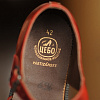 The best models of Czech shoes of the past
In Soviet times, for shoes from Czechoslovakia sold under the Cebo brand, customers stood in line for four hours and did not regret it, because Czech shoes were considered to be of high quality, comfortable and fashionable. Shoe designer Juraj Shushka shared a photo archive of his collection with Shoes Report magazine, which contains the most interesting Cebo models from the 1940's to the 1980's.
 Retail Arithmetic
Before you begin to solve specific problems, you need to find out how accurately all the leaders of your company understand the basic terminology of retail.
 How to fire a worker without tears, scandal and trial
Sooner or later, any manager is faced with the need to part with an employee. Correctly and on time the dismissal procedure will save the company money, and the boss himself - nerves and time. But why sometimes, knowing that a break in relations is inevitable, we postpone the decision for months?