How to avoid over-purchasing goods?
How does selection typically work at an exhibition? A buyer enters a manufacturer's or distributor's booth and begins selecting models based on design, price, and comfort. But how many buyers, starting their workday at an industry trade show, clearly understand how many models, and in what size range, they can purchase from a specific brand? How many orders have already been placed in rubles, in pairs, with other suppliers? And how many shoe and bag models can be placed on store shelves according to the company's visual merchandising standards? It's unlikely that buyers keep all this information in mind as they move from one exhibition booth to another. So how can purchasing truly be done effectively? Should they start with specific models from suppliers, and only then, back in the office, after all the selections, adjust the order and confirm it with suppliers? Or should they define their own working framework in advance, even before the product selection begins—the purchase amount, the number of units, the number of models that can be placed on the shelves? The answers to all these questions are in this article by SR expert on increasing fashion market sales, business coach, and consultant Evgeny Danchev.
 Evgeny Danchev -
business coach, consultant, expert in increasing sales of the fashion market. Author of the book "A Practical Guide to Increasing Sales of Shoes and Accessories". Author of sales scripts "60 responses to customer objections in a retail shoe store" and "Standards for retail shoe sales." Creator of an online school for fashion market leaders.
@evgenydanchev,
https://onlineschool.wconsulting.su/
Having asked buyers similar questions many times, I've never received a clear answer. Everyone just smiles and jokes, saying that such an approach to buying shoes and bags is impossible.
My experience with fashion business owners shows that they're unwilling to conduct a systematic analysis of a product before purchasing. Everything is done on the principle of "Let's go, and then we'll figure it out."
Almost always, when a retail chain grows, both in terms of the number of stores and turnover, the following things happen.
1. Increasing the number of purchased models.
2. Increasing the order amount and the total number of pairs.
But it's important to understand that increasing the number of stores and overall company revenue doesn't necessarily mean more shelf space for models. The retail space in existing stores doesn't change; new space is simply added through expansion, but it can typically accommodate the same number of models, or slightly more or less.
Therefore, product selection should be based on the growth of sizes, not styles. But in practice, this strategy doesn't work. Buyers and business owners (usually the same people) are wary of expanding the size range, citing statistics of large inventory levels at the end of the season and a reluctance to carry inventory for the next season with expanded size ranges. Moreover, they say, customers come late in the season and still see a wide range of styles, which increases the chances of a sale.

In practice, abandoning the strategy of purchasing a deeper size range leads to the opposite effect (the problem of "broken" size ranges and ways to solve it is discussed in Emina Ponyatova's article "Where the Shoe Business Loses Profit: An Analysis of Non-Obvious Factors"). At the end of the season, there are many styles on the shelves, but more than half of them are in extreme sizes that are not popular. What good is it for the average shopper if they need a size 38, but only two out of ten styles they like have it? The likelihood of making a purchase in this scenario is slim.
What conclusion can we draw from this? Before the start of the purchasing season, it's necessary to conduct a merchandising analysis in stores and determine how many styles from the new collection can be placed in your stores according to current visual merchandising standards. Important: the number of styles will differ for the spring-summer and fall-winter seasons.
Further, the collection of models can be conditionally divided into 4 groups:
1. The main assortment (basic) is the one on which you will make the largest turnover.
2. Promotional items – which you will use to attract customers to stores (first price items, budget options).
3. Products to "dilute" the main assortment - bright colors, non-standard design, or above-average price, or something exclusive.
4. New items – models that can become trendy.
And then it's important to determine the number of models and the size depth for each group. The proportions might be something like this:
60% - basic assortment
15% - promotional items
10% - bright colors and exclusive models
15% - new items
Therefore, the most suitable scheme for purchasing footwear assortment is from the general to the specific: first, we determine the global purchase amount, number of models and pairs.
If you go the other way—from specific models, without seeing the entire structure of the product matrix, without understanding how many models can be purchased and at what depth—this almost always leads to over-purchasing of goods and internal cannibalism of models: if there are too many models, they become competitors for each other.
When analyzing the procurement process for clients' businesses, one important detail emerges. The procurement process is, rather, creative, and where creativity exists, there's no room for structure and a systematic approach. Buyers strongly dislike being limited (or being limited themselves) in the number of models they can purchase or the order amount. This is largely why companies accumulate excess inventory for years at the end of the sales season and try to manage it with discounts. However, this strategy leads to lower margins and, consequently, a loss of profit.
In a context of rising taxes, rising corporate costs, and increased inflation, markups should not be reduced, but rather increased. This can only be achieved through wise inventory procurement, taking into account inventory from previous seasons and their liquidity.
A crucial aspect of purchasing a new collection is to accurately track not only the planned purchase price but also the number of pairs. I understand that it's difficult to calculate the exact number of pairs, as the cost price may be slightly higher or lower, but in any case, it's possible and necessary to make such calculations with a small margin of error. This will allow you to create a product matrix before selecting the items.
An example of a fragment of a purchasing matrix used by companies :

In this example, the number of pairs is calculated based on the availability of eight sizes in one box (you may have more or fewer sizes). If the selection is made for three stores, and the company plans to supply one box to each, then the number of styles is multiplied by the number of sizes and the number of stores.
When a company creates such tables for the first time, buyers struggle to comprehend that their creative approach will be constrained by rigid limits on the number of styles and sizes for each product category. Usually, anything new is difficult to accept, and employees come up with plenty of excuses and examples of why it won't work. But this is a matter of systematic thinking and the habit of thinking in terms of efficiency, not emotion. The results of companies that use product matrices demonstrate their effectiveness, which allows them to increase markups and reduce inventory.
Of course, during the product selection process, you might be tempted, for example, to buy more sneakers. Yes, that's possible, but then you need to ask yourself a clear question: what will we be cutting? Loafers or sandals? After all, in this model, it's impossible to purchase more than the pre-calculated amount. The question is: what does the company owner want: to operate by business rules or by business principles? Everyone makes their own decision.
One of the objections fashion retail consultants encounter is supplier refusal to fulfill orders. This is a real problem, and it must be taken into account when purchasing. If orders are placed exactly as planned, and the company knows that, on average, suppliers will not produce or ship 5% of the order, then of course, these 5% should be factored into the calculations and the purchase should be increased by this difference.
There's no perfect workflow; there will always be some errors and deviations. A manager's job isn't to explain why everything can't be done precisely and perfectly, but to strive to avoid overspending the company's resources and minimize losses in operational efficiency. And product procurement impacts these business metrics, serving as a starting point for the company's operations at the start of a new sales season.

There's a saying: a barrier at the entrance to a business process is a barrier at the exit. Errors in product procurement will always impact the financial results at the end of the sales season.
No matter how much buyers resist the introduction of assortment matrices and restrictions on the number of models on store shelves, the current conditions of retail business in the face of fierce competition in the market will not allow them to make purchases based solely on creativity and spontaneity.
If two hunters are fleeing a bear, neither needs to run faster than the bear; the main thing is to outrun the other. For this reason, at a minimum, they should avoid the mistakes their fellow hunters make.
What's really going on with retail managers?
How can a retail shoe store make money with the transition to VAT?
Effective methods that will help improve the effectiveness of sellers
How to open an effective store of shoes and accessories. Success formula
Budget but attractive. How to get a store window right and bright with a limited budget
 Shoes Style and its Discoveries. An Interview with Anton Bazylev, Prize Winner of the International Shoe Design Competition
The international shoe design competition Shoes Style, held in Moscow this year, showcased many interesting footwear and accessory collections. Shoes Report recently published a story about the winners—third-year students from Kosygin Russian State University, Margarita Skvaznikova and Egor Lysov, who presented their "Retrospective" shoe collection at Shoes Style.
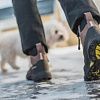 ICEBUG at Euro Shoes: Swedish Innovation in Grip Technology
ICEBUG is a Swedish company steeped in innovation and creativity. Our rapid growth is a result of our expertise in grip and technology. Since its inception, ICEBUG has been creating footwear with superior grip and is always striving to improve grip even further.
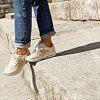 KV+ will present versatile sneakers for both sports and urban wear at Euro Shoes.
The Swiss brand KV+ is not so well known to the general Russian audience, but it is well known in the world of skiing, because it was there that KV+ took its first steps and actively developed. The Swiss brand has earned the trust of the professional sports audience over the past 35 years. At the same time, the Russian sports market of ski equipment has always been a priority for the Swiss.
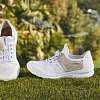 Rieker and Remonte are regular exhibitors at Euro Shoes: meet your favorite brands at the exhibition from August 25 to 28 at the Central Trade Fair Center.
Riker and Remonte will present their Spring/Summer 2027 collections at the Euro Shoes exhibition (August 25–28, WTC Congress Centre).
 New brands at Euro Shoes in August!
At the end of the month, from August 25th to 28th, the international footwear and accessories exhibition Euro Shoes Premiere Collection will take place in Moscow at the WTC Congress Center on Krasnopresnenskaya Embankment. We'd like to introduce you to the new exhibitors at Euro Shoes, who will be presenting their collections of footwear, accessories, shoe care products, and leather goods.
 From July 27 to 29, the Euro Shoes@CAF_Eliteline 2026 exhibition will be held in Almaty, Kazakhstan.
Elite Line is an international specialized exhibition of footwear, fur, leather, and accessories. The exhibition will feature collections from international and domestic manufacturers from Russia, Turkey, Germany, Italy, Kazakhstan, and other countries.
 How to learn to effectively manage store customer traffic?
Customer traffic in shopping malls and street retail is declining; people are shopping less offline for a number of objective reasons, one of which is the convenience of online shopping with all its advantages. And yet, offline shopping continues to thrive. How can we control store traffic, learn to correctly calculate and influence the number of people visiting stores to ensure profitability?
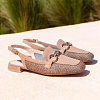 "When Customers Are Few: How Fashion Store Owners Can Squeeze the Most Out of Every Customer"
In recent years, offline retail in clothing, footwear, and accessories has been operating under conditions of a steady decline in incoming traffic. By the end of 2025, offline store traffic in Russia had declined by 8-15%, with the offline segment's purchase rate declining more sharply than the overall market, according to Retail.ru. According to statistics from individual shopping centers, the decline by the end of last year was between 15 and 25%. How can salespeople effectively engage with customers in such challenging conditions? We'll explore service strategies in low traffic conditions with SR expert Elena Vinogradova, who specializes in purchasing and sales in the fashion business. The expert shares proven methods with practical examples of speech modules. Elena is confident that, in a context of declining traffic, high-quality service is becoming the main competitive advantage for the shoe industry.
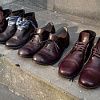 How the Masters Forge. Interviews with the Winners of the International Shoe Design Competition, Shoes Style
In May 2026, the finalists of the international footwear design competition, Shoes Style, were awarded again in Moscow. The annual competition is held by A.N. Kosygin Russian State University, a university that trains shoe designers and technologists, and attracts students from design universities in Russia and the CIS.
 How to sell more without losing customer trust?
Today, discounts and sales are no longer considered an effective tool for achieving sales targets. Furthermore, online and offline stores offer consumers virtually the same price for shoes, and consumers often choose not the cheapest option, but the easiest and fastest one. This is why service and soft sales are becoming a key competitive advantage for shoe stores, says Maria Gerasimenko, an expert at SR in fashion business management and development.
 Euro Shoes: the industry's leading footwear exhibition will be held August 25–28 at the WTC Congress Center.
At the end of August, Moscow will once again become a magnet for the footwear industry: the WTC Congress Center on Krasnopresnenskaya Embankment will host the international exhibition Euro Shoes Premiere Collection—a specialized B2B event for footwear industry and fashion retail professionals, the key industry event of the new purchasing season and the development of fashion retail assortments. Over 100 companies and brands will participate in the exhibition, presenting their spring/summer 2027 collections of shoes, bags, and accessories to professional visitors. A working meeting of the National Footwear Union of Russia (NOBS) will be held as part of Euro Shoes, featuring footwear companies, professional associations, marketplaces, and independent experts.
 The share of marketplaces will grow
The footwear category on Ozon Fashion shows steady growth
The share of online sales in fashion is growing, and last year it was already more than 54%. Buyers are increasingly buying clothes and shoes online, and the lion's share of these purchases are made on marketplaces. Ozon is one of the leading players in the Russian fashion market, and the Fashion direction on the platform is the fastest growing. About trends in online trading, about the specifics of the shoe market and recommendations for brands planning to sell shoes through the marketplace - in an exclusive interview with SR with the Commercial Director of the Footwear direction at Ozon Fashion Olga Moskvicheva.
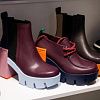 What factors influence pricing, and how to work with retail prices for shoes
Footwear retail is one of those segments that is highly dependent on seasonality. Pricing in the footwear business, in turn, depends on a multitude of factors, from production costs to the vagaries of weather and regional factors.
SR's expert in product assortment and management, Emina Ponyatova, discusses the key principles of pricing footwear products, as well as the main pressure factors and challenges facing footwear retailers in 2025, and offers recommendations on how to ensure successful and profitable retail.
 New Tamaris Spring-Summer 26 Collection: Comfort and Elegance in Every Model
German footwear and accessories brand Tamaris will present its new Spring-Summer '26 collection at the Euro Shoes exhibition in Moscow, from August 27 to 30.
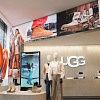 Creating an emotional connection through a showcase
Emotional response from customers is the key to successful retail sales. Shop windows are capable of not only attracting attention, but also evoking emotions: from joy and nostalgia to a sense of belonging and the desire to possess. Using psychological triggers in shop window design helps turn a passerby into a buyer. SR expert in visual merchandising and retail design Viktor Malygin talks about approaches to the concept of shop window design and current themes and plots for presenting goods in shop windows.
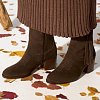 MARCO TOZZI presented his Fall-Winter 2025/26 collection in Moscow.
A harmony of comfort and elegance, fashion trends and classic essentials—German shoe and bag brand MARCO TOZZI presents its new Fall-Winter 2025/26 collection.
 Euro Shoes starts on August 27th!
The leading international exhibition of footwear and accessories in Moscow, Euro Shoes premiere collection, starts next week!
 Euro Shoes: The Fall Premiere That Set Trends and Raised Acute Questions for the Industry
From August 27 to 30, Moscow once again became the shoe capital: the international exhibition Euro Shoes premiere collection was held in the congress center of the Central Trade Fair on Krasnopresnenskaya Embankment. For four days, the exhibition brought together leading global brands, buyers and industry experts, becoming a place where fashion trends are created and business alliances are formed.
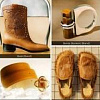 Three fashionable colors for accessories and shoes for the fall-winter 2025/26 season
Each season, trend bureau Future Snoops (formerly Fashion Snoops) identifies key colors for different product groups. For shoes, bags, and accessories, the forecast takes into account the specifics of the categories and is based on general cross-market color forecasts for the season. The three colors described in the article below will influence the accessories market in the fall/winter 25/26 season, helping you promote trendy new items and update classic styles. These shades have beautiful and delicious names: "Ice Star," "Honey Glaze," and "Cherry Jam."
 Euro Shoes — March 4-7, 2026 at the WTC Congress Center
From March 4th to 7th, leading brands from Europe, Asia, and the CIS will gather at the WTC Congress Center in Moscow to present their Fall/Winter 2026 collections, capture current trends, and set the direction for the fashion industry.
 Customer profiling in a shoe store. What is this technique and how can it be used in sales?
Profiling is a scientific method of "reading people," allowing one to create a psychological profile of a person and predict their actions or behavior in certain situations, or even catch them in a lie. Profiling is used in sales because the salesperson needs to understand a person's emotional state and their underlying motivations for purchasing. An expert and practitioner in sales growth in fashion, SR, discusses this method and its practical application in footwear retail.
 Shoe educational program: what shoe soles are made of
“What is the difference between TEP and EVA? What does tunit promise me? Is PVC glue? What is the sole of these shoes made of? ”- the modern buyer wants to know everything. In order not to smash his face in front of him and be able to explain whether such a sole suits him in soles, carefully read this article. In it, process engineer Igor Okorokov tells what materials the soles of shoes are made of and what makes each of them so good.
 How to set prices that will earn
Some businessmen still confuse the concept of margin with the concept of trade margins and set prices for their goods, guided solely by the example of competitors. No wonder they go broke! Analyst at the Academy of Retail Technologies Maxim Gorshkov gives several tips and formulas with which you can set not only ruinous, but also profitable prices.
 Sales of shoes and accessories: effective techniques for business rhetoric
Which speech modules are effective in communicating with potential and current customers of shoe stores, and which are not, Anna Bocharova, a business consultant, knows.
 We form the salary of sellers: expert advice
“How do you charge your consultants for personal or general sales?” Is one of the most popular questions causing a lot of controversy and gossip on the online forums of retail business owners. Indeed, how to properly form the earnings of sellers? But what about bonuses, where to get a sales plan from, do employees allow them to buy goods at discounted stores? In search of truth, the Shoes Report turned to a dozen shoe retailers, but no company wanted to disclose its motivation system - the process of its development was too complicated and individual. Then we asked four business consultants, and finally became convinced that the topic of seller motivation is very complex, because even our experts could not come to a common opinion.
 The whole truth about Bayer. Who is he and how to become one?
Bayer is no longer a new, but still a popular and sought-after profession. It’s fashionable to be a buyer. Buyers are at the origins of the emergence and development of trends. If the designer offers his vision of fashion in the season, then the buyer selects the most interesting commercial ideas. It is on buyers that the policy of sales of stores and what, in the end, the buyer will wear depends on. This profession is surrounded by a magical fleur, often associated with a lack of understanding of what exactly is the work of a buyer.
 Technology Selling Issues
There is nothing worse than meeting the buyer with the words “Hello, can I help you with something?”, Because the seller works in the store just to help. Criticizing this well-established pattern of communication with the buyer, Andrei Chirkarev, business coach for effective sales and the founder of the New Economy project, shares the technology of truly selling issues with readers of Shoes Report.
 Fur, and not only: types of lining
In the production of winter footwear, various materials are used that are designed to retain heat and meet the requirements of consumers: natural sheepleather, artificial fur, artificial fur from natural wool and others. All types of lining fur have their own advantages and disadvantages. Let's consider the properties of each of them.
 The best models of Czech shoes of the past
In Soviet times, for shoes from Czechoslovakia sold under the Cebo brand, customers stood in line for four hours and did not regret it, because Czech shoes were considered to be of high quality, comfortable and fashionable. Shoe designer Juraj Shushka shared a photo archive of his collection with Shoes Report magazine, which contains the most interesting Cebo models from the 1940's to the 1980's.
 Retail Arithmetic
Before you begin to solve specific problems, you need to find out how accurately all the leaders of your company understand the basic terminology of retail.
 How to fire a worker without tears, scandal and trial
Sooner or later, any manager is faced with the need to part with an employee. Correctly and on time the dismissal procedure will save the company money, and the boss himself - nerves and time. But why sometimes, knowing that a break in relations is inevitable, we postpone the decision for months?