 Giotto
A new look at Giotto. Interview with the head of the company Vladimir Timofeev
The corner of the Russian women's shoe brand Giotto in the fashionable metropolitan department store Trend Island became the first application of a famous Moscow shoe factory to develop and promote its own brand.
Until now, the company has focused on sewing shoes for third-party customers and large retailers. Shoes Report spoke with the head of Giotto, Vladimir Timofeev, about its new strategy and the prospects for domestic production.
The Giotto company - founded in 1998, is a leading Russian manufacturer of women's shoes. The company has two production sites - in Moscow and Kaluga. Product output is 120-130 thousand pairs of shoes per year. Shoes under the Giotto brand belong to the “medium plus” price category; collections are presented on Lamoda, Wildberries. The Giotto branded corner is present in the Trend Island department store in the capital's Aviapark shopping center.
Vladimir, finally, our country has come to the need to develop domestic production, have you already felt support?
There is a lot of foam, but there is little use yet.
Did the state provide any benefits?
Well, yes, government support was expressed in tax benefits on wages, in the form of deferments. But everyone who took advantage of these benefits is now dealing with their tax debts. To the point that bailiffs are sent to companies. It is clear that the amounts were large and they did not have time to close them.
Are tax authorities now pursuing tough policies?
I can't say that. In recent years they have been quite loyal to us. Excesses are decisions of specific individuals, the head of the tax office, for example. Because, one way or another, everyone understands that if this is production, then the company will not go anywhere, it will still pay taxes.
But Ralf Ringer is currently in litigation with the tax authorities...
This is exactly the situation when a person should be given a Hero of Labor, but instead he is subjected to pressure, almost personal fines are imposed. That's bullshit! Berezhnoy (Editor's note: Andrey Berezhnoy, entrepreneur, founder of Ralf Ringer) raised several factories, created a huge number of jobs, and now, instead of helping him, they are hindering him. With us, either you enter into power and everyone pampers and cherishes you, or there are no such connections, and they begin to pummel you from all sides. Moreover, in the case of Ralf Ringer, there are a number of legislative acts according to which the tax inspectorate does not have the right to behave this way. But it is impossible to reach either the prosecutor’s office or any other authorities.
And on TV at this time they are talking about how import substitution is growing in Russia, and shoe production in Moscow has increased by 13%. Where did it increase? With today's labor legislation this is completely impossible. The ones who really survive are those who are on the shortcut, who somehow cheat. In such conditions it is extremely difficult to create a normal product. And Berezhnoy makes a high-quality product, leather shoes, anatomically correct. Why take it out? Impossible to understand!
Another negative is our cross-border trade. They have again legalized the tax-free import of goods worth a thousand euros. A Russian manufacturer must pay 20% VAT, but here you can take 50 people, each of whom will import goods worth 1000 euros, and now shoes worth 50 thousand euros are imported duty-free. Naturally, everyone who uses this mechanism wins. And the manufacturer must pay wages, all taxes, etc.
Plus, Chinese labor legislation is radically different from Russian. If you dig deep, we have an unenviable position. In Uzbekistan, VAT is already 12%. They decided that they would develop the industry and invest in it. They have benefits, you can absolutely calmly come to the Minister of Light Industry and agree on some tax breaks in one case or another. There you can agree and discuss, but here we cannot.
Now the colossal problem is that our market is flooded with low-quality products, which are much cheaper and outperform Russian-made products. It is difficult to compete with a Chinese product, which is created on preferential sites, with enormous subsidies from the state, and which is produced from low-grade synthetics. But the consumer doesn’t understand, he chooses the price. Today, a lot of shoes are imported that are technically incorrectly made. And if the block is created incorrectly, it affects the spine. Such shoes are imported in bulk, no one keeps track.
 Giotto
There were a number of publications in the media that Giotto invests in brand development. Until now you haven’t invested much in your own brand, what has changed?
Indeed, for the last ten years we have been trying to sew for third-party brands of large retail. I myself prefer to engage in production rather than trade. But at some point the economic situation changed and retailers began to place more orders in China.
It's hard to blame anyone here. If we look at China, they have a more developed infrastructure and quite broad opportunities. In our country, if we take not only shoe tailoring, but also the production of all components - leather, bottom parts, accessories - they are limited. But I still think that for Russian retail it is not a problem to load all Russian production capacities. Because today, if you look at the statistics, our production volume of leather shoes is about 20 million rubles. per year, for a retail that sells hundreds of millions, this is not a volume!
Retailers could be a little more loyal to their own, but this is not happening. That's why a year ago we decided to slowly move Giotto forward. The same Berezhnoy is doing well today, thanks to the fact that he has developed his own distribution network, and we have now followed the same path. First, we have corners in the Trend Island department store in the Moscow Aviapark shopping center.
But you had shops?
Some time ago there were client stores. But now they are gone. For now we are represented in Trend Island, but it is still unknown when we will open the next site. It’s hard to compete with large retail today. In our niche there is Ekonika, which has become a real monster in shoe retail, and Mascotte, which has a very wide line, is actively developing. We don’t yet know how to compete with them. Let's try to promote our own brand and achieve recognition. And then we’ll start developing retail, because this is quite an expensive story. But now many Russian manufacturers have realized that they need to promote their brand and develop their retail.
Well, of course, recognition is very important, because even when you are looking for something on marketplaces, you type the brand name into the search engine...
That is, we need to create a loyal consumer, we are doing this now. This is also quite expensive. We have signed a contract with experts from the Be In Open Fashion Industry Forum, and they are working with us. They will study it for six months, conduct focus groups, etc. They will identify the consumer and develop a strategy.
 Giotto
Will you continue to produce women's shoes under your brand?
Yes, sewing both men's and women's clothes is not my option. We have occupied a certain niche in women's high-quality shoes, and that is where we sit. The way we created the collection ourselves is how we create it. We try to stick to the so-called modernized classics. Going into something extravagant is a risk. Now the trends are 10 cm stiletto heels with a very elongated last, but there are actually few consumers of such shoes.
Now there is a trend for “Cossack” boots...
We also have “Cossacks”, but this is such a conditional trend... For the last few years, everyone has been using short lasts. And then the trend began to lengthen the lasts, the toe parts became a little more aggressive, the bottom details became a little more elegant. In general, now the collections of shoe brands offer a wide variety of models, and we make a fairly wide offer. This year, our low-shoe group did well - a short round last, a classic slightly thicker sole. But the more square-shaped, rough silhouette, which is supposedly one of the trends, also sold well, but in a completely different way.
Today there are very few quality products on the market. That left Ekonika, which has now released a strong collection. It already contains models that can be seen in the collections of brands that set global trends.
And Carlo Pazolini?
Carlo Pazolini has reduced the number of stores. Although the brand is now represented on marketplaces, and the brand has crazy recognition, overall the business is declining, although it’s a shame.
How have you survived the pandemic?
We survived and received some government subsidies. The pandemic was precisely the turning point when we started thinking about our own sales. Because as soon as the pandemic began, all the wholesale customers waved their hand at us and said we don’t need it. I'm not talking about large retail, but about small shops. We were left with wholesale products in the warehouse, without money, the factories stood still. But somehow we managed.
Our government mechanisms still don’t work. We hear from everywhere that the state is investing billions and trillions in the industry, but where are they? I asked for support - I need space. Renting in Moscow is a disaster, the cost is enormous, and it is very difficult to find premises of our format. But no, we were offered preferential loans at 6,5% per annum secured by real estate as support. Well, where do we get real estate from? We’re not the “Paris Commune”, which was privatized?
And the Ministry of Light Industry organizes some forums all the time. We need to speak there and talk about all this...
Today, the shoe industry accounts for less than one percent; no one sees it and no one understands it. The global trend is that globalization has not worked, and production needs to be localized. But as always, we will jump into the last car. - The development of the footwear industry in our country is far away! So far, there is no government program to support Russian shoe production. It is believed that we would rather bring cheap goods from China, Pakistan, India...
Someone has to write such a program, who knows how to do this?
It’s not difficult to gather a group of economists who will calculate and write everything. There must be political will. You can even bring up the works of the last Soviet economists, who already said all this, but no one listened to them. While we are winning in foreign policy, our domestic policy is greatly sagging. Shoes are fully funded by the state order, and we ourselves sew shoes for the army, everything is great here. As for civilian shoes, the general concept is “speculators will bring them, we’ll buy them.”
Now they seem to have started talking about creating shoe clusters in Rostov and Dagestan. But in our country, such clusters are created for one purpose - to collect more taxes. So far nothing sensible has been offered.
There is an industrial cluster somewhere in Moscow; rent on its territory costs 8000 rubles per square meter per year! And in Italy, 10 euros per square meter, and this is at a completely different level of economy! We need to create normal clusters, and not be guided by the goal of robbing the unfortunate people who are somehow trying to produce something decent on their knees.
In Rostov they produce a fairly high-quality, technically correct product. Yes, they use cheap leather, cheap materials to produce the soles, but these are still not low-quality products that we get from abroad for two pennies!
So I need to replace 50% of my equipment fleet. But the loan is offered on the condition that 50% of the equipment is Russian. But we don’t produce this! They offer leasing on unacceptable terms; Russian shoe manufacturers do not earn that much and will never recoup this leasing. At least they would give me the opportunity to buy equipment and pay for it within ten years...
All these benefits can result in colossal problems. Therefore, we sit, repair the equipment that we have, and maintain it at a good level. We try to produce good quality shoes and are glad that we have decent tanneries, such as the Yaroslavl tannery, where good specialists work.
 Giotto
What about the rest of the components?
We use Russian components to the maximum, even if imported materials are used in their production, due to cheaper labor here, they are still cheaper. We use domestic parts for the bottom, soles, and zippers; we order them in St. Petersburg.
Intergluing, toe materials, backdrops, braids, glue, threads - all this is imported, since it is not produced in our country. But for some items, we are now switching to Belarusian products - they have learned to make them quite well.
It’s expensive to produce complex soles in Russia, due to the fact that there is no full-fledged shoe industry. Plant workers have few orders and they cannot buy special equipment, they do everything “on their knees”, it turns out well, but the cost is high. Therefore, we have reduced shoe models with complex soles.
After the pandemic, have people started buying shoes online more actively?
Marketplaces work well. Of course, a lot of goods are spoiled and a lot is stolen. At the beginning, we placed our first line on Wildberries, and it sold us well. But gradually, due to the requirements for constant discounts, this platform turned almost into a stock one. The current Giotto collections are now presented on LaModa. Old collections are on Wildberries. Sales on LaModa have been good over the past two years.
We tried to enter Ozon, but they also have a discount policy, which simply kills the brand. We refused, even though they were ready to buy the goods. We also have wholesale clients in different regions. But regional clients have become lazy and mostly prefer to develop through franchising. It’s convenient; if you take a brand franchise, you get a full range, merchandising, and equipment. In a word, you spend money with guaranteed results. In this regard, the number of small sellers has greatly decreased; it is difficult for them to compete with large retail; they have different entry prices and completely different volumes.
Interview: Marina Shumilina
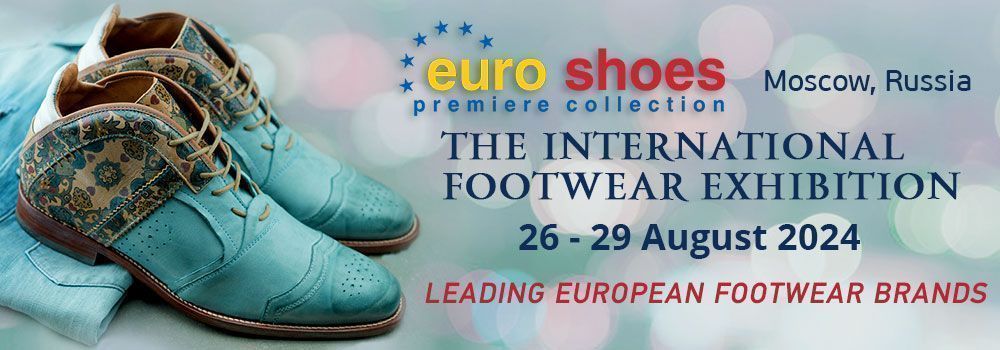
The international footwear exhibition Euro Shoes premiere collection was successfully held in Moscow
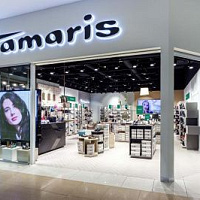
We are ready for active development in the Russian market
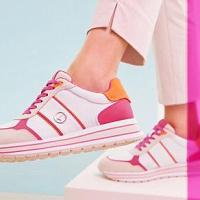
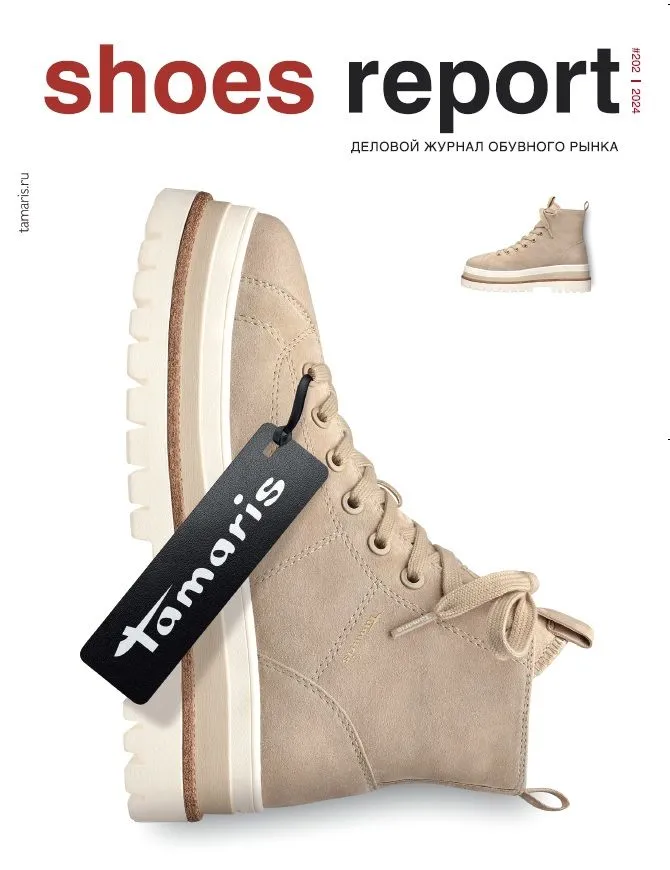
Bright colors of the approaching spring: shoe brand TAMARIS showed a new collection SS'24
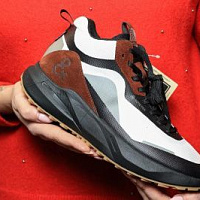
IGI&Co presented at EURO SHOES a new line of Urban active sneakers with a GORE-TEX membrane
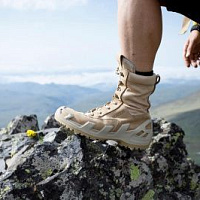
Turkish brand Vaneda on Euro Shoes

 Coach turned to Big Data analysis and won the interest of a young audience
American handbag brand Coach has planned the success of its Tabby model among a younger audience, Generation Z, by turning to big data analysis, abandoning traditional and analogue tools, such as human intuition or the ability of any executive to sense “which way the wind will blow,” writes B.O.F.
Coach turned to Big Data analysis and won the interest of a young audience
American handbag brand Coach has planned the success of its Tabby model among a younger audience, Generation Z, by turning to big data analysis, abandoning traditional and analogue tools, such as human intuition or the ability of any executive to sense “which way the wind will blow,” writes B.O.F.
 IDOL updates the concept
The IDOL brand, part of the Melon Fashion Group portfolio, opened the first flagship in an updated concept in the Aviapark shopping center in Moscow.
IDOL updates the concept
The IDOL brand, part of the Melon Fashion Group portfolio, opened the first flagship in an updated concept in the Aviapark shopping center in Moscow.
 Seven “sins” of the shoe business. How do owners harm the company with their own hands?
Why is Company X able to create a strong, profitable brand, but Company Y is struggling to make ends meet? Many people prefer to attribute success to luck, luck, or the support of strong patrons. And few people ask themselves the question: “What am I doing wrong?” Moreover, many entrepreneurs begin to harm their business from the first day of its opening. In this article, together with SR expert in the field of fashion business management and development, Maria Gerasimenko, we will look at the 7 main “sins” that business owners commit using specific examples.
Seven “sins” of the shoe business. How do owners harm the company with their own hands?
Why is Company X able to create a strong, profitable brand, but Company Y is struggling to make ends meet? Many people prefer to attribute success to luck, luck, or the support of strong patrons. And few people ask themselves the question: “What am I doing wrong?” Moreover, many entrepreneurs begin to harm their business from the first day of its opening. In this article, together with SR expert in the field of fashion business management and development, Maria Gerasimenko, we will look at the 7 main “sins” that business owners commit using specific examples.
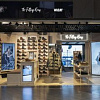 Current techniques in lighting a shoe store
Today, walking through the galleries of shopping centers, we see a variety of formats of offline stores. New concepts of retail spaces attract with an individual, memorable design. In a certain sense, they are an element of the show, a tool through which the buyer receives a new and interesting experience. Together with SR expert in the field of lighting technology in retail, Tatyana Ryzhova, we will look at current lighting design techniques for modern shoe stores, which we will see more and more often in new retail outlets in the near future.
Current techniques in lighting a shoe store
Today, walking through the galleries of shopping centers, we see a variety of formats of offline stores. New concepts of retail spaces attract with an individual, memorable design. In a certain sense, they are an element of the show, a tool through which the buyer receives a new and interesting experience. Together with SR expert in the field of lighting technology in retail, Tatyana Ryzhova, we will look at current lighting design techniques for modern shoe stores, which we will see more and more often in new retail outlets in the near future.
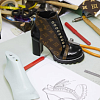 Louis Vuitton opens a new factory in Italy
Louis Vuitton has opened its second shoe factory in Italy. After opening the first one in Fiesso d'Artico in Veneto, the LVMH flagship brand has just opened a new production site dedicated to this category of footwear in the industrial zone of Civitano in the Marche region. There is also another brand production facility in Tuscany, where bags and leather accessories are produced, writes fr.fashionnetwork.com.
Louis Vuitton opens a new factory in Italy
Louis Vuitton has opened its second shoe factory in Italy. After opening the first one in Fiesso d'Artico in Veneto, the LVMH flagship brand has just opened a new production site dedicated to this category of footwear in the industrial zone of Civitano in the Marche region. There is also another brand production facility in Tuscany, where bags and leather accessories are produced, writes fr.fashionnetwork.com.
 The Euro Shoes@CAF exhibition will be held in Almaty
From March 11 to 13, the Euro Shoes@CAF (Central Asia Fashion) exhibition will be held in Almaty at the Atakent exhibition complex. The exhibition, which is the largest international event in the fashion industry in Central Asia, will present collections of clothing, shoes and accessories.
The Euro Shoes@CAF exhibition will be held in Almaty
From March 11 to 13, the Euro Shoes@CAF (Central Asia Fashion) exhibition will be held in Almaty at the Atakent exhibition complex. The exhibition, which is the largest international event in the fashion industry in Central Asia, will present collections of clothing, shoes and accessories.
 Euro Shoes will start operating on February 19 in Moscow!
The winter session of the international exhibition of footwear and accessories Euro Shoes premiere collection will be held in Moscow at the Expocenter from February 19 to 22. The organizers promise the presence of all the main participants at the exhibition, as well as new names from Europe, Asia and Russia.
Euro Shoes will start operating on February 19 in Moscow!
The winter session of the international exhibition of footwear and accessories Euro Shoes premiere collection will be held in Moscow at the Expocenter from February 19 to 22. The organizers promise the presence of all the main participants at the exhibition, as well as new names from Europe, Asia and Russia.
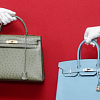 American buyers couldn't buy Birkin bags and sued Hermès
French fashion house Hermès is facing a lawsuit in California from two customers who were unable to purchase exclusive Birkin bags. The fashion house is accused of unfair commercial practices.
American buyers couldn't buy Birkin bags and sued Hermès
French fashion house Hermès is facing a lawsuit in California from two customers who were unable to purchase exclusive Birkin bags. The fashion house is accused of unfair commercial practices.
 Why Rendez-Vous and Yandex Lavka released a “bread bag”
Shoe retailer Rendez-Vous announced the launch of a spring collaboration with Yandex Lavka and released a roll that resembles the shape of a woman’s handbag. This “Bread Bag” is presented in the Yandex.Lavka application at a price of 249 rubles. On the product packaging there is a promotional code for 1000 rubles, which can be spent in the Rendez-Vous network.
Why Rendez-Vous and Yandex Lavka released a “bread bag”
Shoe retailer Rendez-Vous announced the launch of a spring collaboration with Yandex Lavka and released a roll that resembles the shape of a woman’s handbag. This “Bread Bag” is presented in the Yandex.Lavka application at a price of 249 rubles. On the product packaging there is a promotional code for 1000 rubles, which can be spent in the Rendez-Vous network.
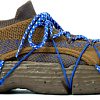 Camper has released innovative sneakers - designers
Spanish brand Camper's new Roku sneaker features six interchangeable components to create up to 64 different looks and color combinations. Roku means "six" in Japanese.
Camper has released innovative sneakers - designers
Spanish brand Camper's new Roku sneaker features six interchangeable components to create up to 64 different looks and color combinations. Roku means "six" in Japanese.
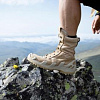 Turkish brand Vaneda on Euro Shoes
Street style, sport, outdoor, military – the main style directions of footwear of the company from Turkey
Turkish brand Vaneda on Euro Shoes
Street style, sport, outdoor, military – the main style directions of footwear of the company from Turkey
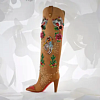 Christian Louboutin presented a collection in a cowboy style
At the Loubi Show in Paris, the French luxury brand Christian Louboutin presented its fall 2024 collection, following the trend - in the style of the Wild West. It included cowboy boots and rhinestone loafers.
Christian Louboutin presented a collection in a cowboy style
At the Loubi Show in Paris, the French luxury brand Christian Louboutin presented its fall 2024 collection, following the trend - in the style of the Wild West. It included cowboy boots and rhinestone loafers.
 Fashion Week takes place in Moscow
Fashion Week takes place in the Russian capital. Events include fashion shows, markets where you can purchase clothes, bags and accessories, and a B2B Showroom for fashion industry professionals.
Fashion Week takes place in Moscow
Fashion Week takes place in the Russian capital. Events include fashion shows, markets where you can purchase clothes, bags and accessories, and a B2B Showroom for fashion industry professionals.
 We are ready for active development in the Russian market
Friedrich Naumann, CEO of the Tamaris brand, told Shoes Report about the company’s ambitious plans, business development in Russia and expansion of the retail network, and also shared details about new collections and launches.
We are ready for active development in the Russian market
Friedrich Naumann, CEO of the Tamaris brand, told Shoes Report about the company’s ambitious plans, business development in Russia and expansion of the retail network, and also shared details about new collections and launches.
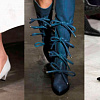 Fashion trends Fall-Winter 2023/24 for commercial footwear purchases
Permanent contributor to Shoes Report. Elena Vinogradova, an expert in sales and purchases in the fashion business, prepared an overview of the trends for the autumn-winter 2023/24 season especially for us.
Fashion trends Fall-Winter 2023/24 for commercial footwear purchases
Permanent contributor to Shoes Report. Elena Vinogradova, an expert in sales and purchases in the fashion business, prepared an overview of the trends for the autumn-winter 2023/24 season especially for us.
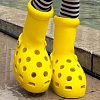 MSCHF and Crocs launch "Big Yellow Boots"
Creator of the Big Red Boots, Brooklyn brand MSCHF has teamed up with American plastic clog and sandal brand Crocs for another oversized shoe. The new Big Yellow Boots will go on sale on August 9th.
MSCHF and Crocs launch "Big Yellow Boots"
Creator of the Big Red Boots, Brooklyn brand MSCHF has teamed up with American plastic clog and sandal brand Crocs for another oversized shoe. The new Big Yellow Boots will go on sale on August 9th.
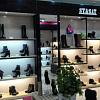 Five rules of professional lighting for a shoe store - something that is relevant in any season
When developing a lighting concept for shoe retailers, it is important to take into account not only the history of the brand, the architectural content of the premises, the target audience of the stores, but also the seasonality of the goods. With the onset of the cold season, client preferences change: bright weightless shoes are replaced by more massive models in discreet dark colors. Despite significant differences in summer and winter collections, the overall philosophy of the brand, its recognition should remain unchanged at any time of the year. Tatyana Ryzhova, an SR lighting expert in fashion retail, has identified five basic rules for a competent lighting concept for a shoe store for readers of the magazine, which will help to present winter assortment to customers in a winning way.
Five rules of professional lighting for a shoe store - something that is relevant in any season
When developing a lighting concept for shoe retailers, it is important to take into account not only the history of the brand, the architectural content of the premises, the target audience of the stores, but also the seasonality of the goods. With the onset of the cold season, client preferences change: bright weightless shoes are replaced by more massive models in discreet dark colors. Despite significant differences in summer and winter collections, the overall philosophy of the brand, its recognition should remain unchanged at any time of the year. Tatyana Ryzhova, an SR lighting expert in fashion retail, has identified five basic rules for a competent lighting concept for a shoe store for readers of the magazine, which will help to present winter assortment to customers in a winning way.
 I doubt and object: how to find an approach to difficult clients?
How good and serene would be the work of a salesperson if the customers were calm, cheerful, always knew exactly what they wanted, and bought, bought, bought! It is a pity that this is possible only in dreams. Therefore, we will not dream, but we will act. Together with Maria Gerasimenko, a permanent author of SR, we understand the doubts and objections of buyers and build a strategy for working with them. Our expert pays special attention to the two main objections of buyers, on which 82% of sales are lost.
I doubt and object: how to find an approach to difficult clients?
How good and serene would be the work of a salesperson if the customers were calm, cheerful, always knew exactly what they wanted, and bought, bought, bought! It is a pity that this is possible only in dreams. Therefore, we will not dream, but we will act. Together with Maria Gerasimenko, a permanent author of SR, we understand the doubts and objections of buyers and build a strategy for working with them. Our expert pays special attention to the two main objections of buyers, on which 82% of sales are lost.
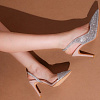 EURO SHOES presents an updated section of the GLOBAL SHOES exhibition with collections of shoe and bag brands from Asian countries
EURO SHOES premiere collection is expanding. Along with the traditional pool of leading European footwear brands from Germany, Spain, Italy and Turkey, several dozen footwear and bag brands from the Middle Kingdom will be presented in the GLOBAL SHOES section at the Moscow Expocentre from August 29 to September 1.
EURO SHOES presents an updated section of the GLOBAL SHOES exhibition with collections of shoe and bag brands from Asian countries
EURO SHOES premiere collection is expanding. Along with the traditional pool of leading European footwear brands from Germany, Spain, Italy and Turkey, several dozen footwear and bag brands from the Middle Kingdom will be presented in the GLOBAL SHOES section at the Moscow Expocentre from August 29 to September 1.
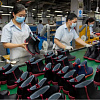 World Footwear Yearbook: Global footwear production reaches 23,9 billion pairs and is back to pre-pandemic levels
The Portuguese association of shoe manufacturers APICCAPS published the 13th edition of the international statistical bulletin World Footwear Yearbook for 2023, according to which in 2022 the production and export of shoes worldwide increased by 7,6% and 9%, respectively, and the world production of shoes reached 23,9 billion couples and returned to pre-pandemic levels.
World Footwear Yearbook: Global footwear production reaches 23,9 billion pairs and is back to pre-pandemic levels
The Portuguese association of shoe manufacturers APICCAPS published the 13th edition of the international statistical bulletin World Footwear Yearbook for 2023, according to which in 2022 the production and export of shoes worldwide increased by 7,6% and 9%, respectively, and the world production of shoes reached 23,9 billion couples and returned to pre-pandemic levels.
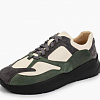 Rostov footwear brand Novak presented a collection of sneakers and sneakers
In the spring-summer 2023 season, the Rostov-on-Don shoe brand Novak presented a cute collection of sneakers and sneakers for every day. The upper of the shoe is made of genuine leather, suede, nubuck, the sole is made of light EVA.
Rostov footwear brand Novak presented a collection of sneakers and sneakers
In the spring-summer 2023 season, the Rostov-on-Don shoe brand Novak presented a cute collection of sneakers and sneakers for every day. The upper of the shoe is made of genuine leather, suede, nubuck, the sole is made of light EVA.
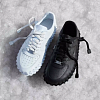 Jacquemus x Nike collaboration released
The second collaboration between Jacquemus and Nike, which has been talked about so much, is finally out. The appearance of the couple for many was a surprise. The model of Nike Air Force 1 sneakers, which was taken as the basis of the new collection, has undergone significant changes.
Jacquemus x Nike collaboration released
The second collaboration between Jacquemus and Nike, which has been talked about so much, is finally out. The appearance of the couple for many was a surprise. The model of Nike Air Force 1 sneakers, which was taken as the basis of the new collection, has undergone significant changes.
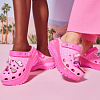 Crocs releases a collaboration with Barbie
If Barbie ditched heels and wore crocs, they would be pink. It was this collection in pink that was released by the American brand of plastic clogs Crocs, for the release of the film "Barbie" in the United States.
Crocs releases a collaboration with Barbie
If Barbie ditched heels and wore crocs, they would be pink. It was this collection in pink that was released by the American brand of plastic clogs Crocs, for the release of the film "Barbie" in the United States.
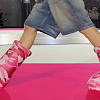 Japanese BAPE takes to the catwalk MSCHF Big Red Boots
The story of Brooklyn brand MSCHF's oversized rubber boots continues. The last time they made noise in the auditorium was at the Rick Owens menswear show. Now they have already appeared on the podium.
Japanese BAPE takes to the catwalk MSCHF Big Red Boots
The story of Brooklyn brand MSCHF's oversized rubber boots continues. The last time they made noise in the auditorium was at the Rick Owens menswear show. Now they have already appeared on the podium.
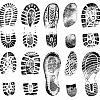 Shoe educational program: what shoe soles are made of
“What is the difference between TEP and EVA? What does tunit promise me? Is PVC glue? What is the sole of these shoes made of? ”- the modern buyer wants to know everything. In order not to smash his face in front of him and be able to explain whether such a sole suits him in soles, carefully read this article. In it, process engineer Igor Okorokov tells what materials the soles of shoes are made of and what makes each of them so good.
Shoe educational program: what shoe soles are made of
“What is the difference between TEP and EVA? What does tunit promise me? Is PVC glue? What is the sole of these shoes made of? ”- the modern buyer wants to know everything. In order not to smash his face in front of him and be able to explain whether such a sole suits him in soles, carefully read this article. In it, process engineer Igor Okorokov tells what materials the soles of shoes are made of and what makes each of them so good.
 How to set prices that will earn
Some businessmen still confuse the concept of margin with the concept of trade margins and set prices for their goods, guided solely by the example of competitors. No wonder they go broke! Analyst at the Academy of Retail Technologies Maxim Gorshkov gives several tips and formulas with which you can set not only ruinous, but also profitable prices.
How to set prices that will earn
Some businessmen still confuse the concept of margin with the concept of trade margins and set prices for their goods, guided solely by the example of competitors. No wonder they go broke! Analyst at the Academy of Retail Technologies Maxim Gorshkov gives several tips and formulas with which you can set not only ruinous, but also profitable prices.
 Sales of shoes and accessories: effective techniques for business rhetoric
Which speech modules are effective in communicating with potential and current customers of shoe stores, and which are not, Anna Bocharova, a business consultant, knows.
Sales of shoes and accessories: effective techniques for business rhetoric
Which speech modules are effective in communicating with potential and current customers of shoe stores, and which are not, Anna Bocharova, a business consultant, knows.
 We form the salary of sellers: expert advice
“How do you charge your consultants for personal or general sales?” Is one of the most popular questions causing a lot of controversy and gossip on the online forums of retail business owners. Indeed, how to properly form the earnings of sellers? But what about bonuses, where to get a sales plan from, do employees allow them to buy goods at discounted stores? In search of truth, the Shoes Report turned to a dozen shoe retailers, but no company wanted to disclose its motivation system - the process of its development was too complicated and individual. Then we asked four business consultants, and finally became convinced that the topic of seller motivation is very complex, because even our experts could not come to a common opinion.
We form the salary of sellers: expert advice
“How do you charge your consultants for personal or general sales?” Is one of the most popular questions causing a lot of controversy and gossip on the online forums of retail business owners. Indeed, how to properly form the earnings of sellers? But what about bonuses, where to get a sales plan from, do employees allow them to buy goods at discounted stores? In search of truth, the Shoes Report turned to a dozen shoe retailers, but no company wanted to disclose its motivation system - the process of its development was too complicated and individual. Then we asked four business consultants, and finally became convinced that the topic of seller motivation is very complex, because even our experts could not come to a common opinion.
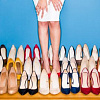 Technology Selling Issues
There is nothing worse than meeting the buyer with the words “Hello, can I help you with something?”, Because the seller works in the store just to help. Criticizing this well-established pattern of communication with the buyer, Andrei Chirkarev, business coach for effective sales and the founder of the New Economy project, shares the technology of truly selling issues with readers of Shoes Report.
Technology Selling Issues
There is nothing worse than meeting the buyer with the words “Hello, can I help you with something?”, Because the seller works in the store just to help. Criticizing this well-established pattern of communication with the buyer, Andrei Chirkarev, business coach for effective sales and the founder of the New Economy project, shares the technology of truly selling issues with readers of Shoes Report.
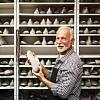 The whole truth about Bayer. Who is he and how to become one?
Bayer is no longer a new, but still a popular and sought-after profession. It’s fashionable to be a buyer. Buyers are at the origins of the emergence and development of trends. If the designer offers his vision of fashion in the season, then the buyer selects the most interesting commercial ideas. It is on buyers that the policy of sales of stores and what, in the end, the buyer will wear depends on. This profession is surrounded by a magical fleur, often associated with a lack of understanding of what exactly is the work of a buyer.
The whole truth about Bayer. Who is he and how to become one?
Bayer is no longer a new, but still a popular and sought-after profession. It’s fashionable to be a buyer. Buyers are at the origins of the emergence and development of trends. If the designer offers his vision of fashion in the season, then the buyer selects the most interesting commercial ideas. It is on buyers that the policy of sales of stores and what, in the end, the buyer will wear depends on. This profession is surrounded by a magical fleur, often associated with a lack of understanding of what exactly is the work of a buyer.
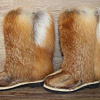 Fur, and not only: types of lining
In the production of winter footwear, various materials are used that are designed to retain heat and meet the requirements of consumers: natural sheepleather, artificial fur, artificial fur from natural wool and others. All types of lining fur have their own advantages and disadvantages. Let's consider the properties of each of them.
Fur, and not only: types of lining
In the production of winter footwear, various materials are used that are designed to retain heat and meet the requirements of consumers: natural sheepleather, artificial fur, artificial fur from natural wool and others. All types of lining fur have their own advantages and disadvantages. Let's consider the properties of each of them.
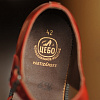 The best models of Czech shoes of the past
In Soviet times, for shoes from Czechoslovakia sold under the Cebo brand, customers stood in line for four hours and did not regret it, because Czech shoes were considered to be of high quality, comfortable and fashionable. Shoe designer Juraj Shushka shared a photo archive of his collection with Shoes Report magazine, which contains the most interesting Cebo models from the 1940's to the 1980's.
The best models of Czech shoes of the past
In Soviet times, for shoes from Czechoslovakia sold under the Cebo brand, customers stood in line for four hours and did not regret it, because Czech shoes were considered to be of high quality, comfortable and fashionable. Shoe designer Juraj Shushka shared a photo archive of his collection with Shoes Report magazine, which contains the most interesting Cebo models from the 1940's to the 1980's.
 Retail Arithmetic
Before you begin to solve specific problems, you need to find out how accurately all the leaders of your company understand the basic terminology of retail.
Retail Arithmetic
Before you begin to solve specific problems, you need to find out how accurately all the leaders of your company understand the basic terminology of retail.
 How to fire a worker without tears, scandal and trial
Sooner or later, any manager is faced with the need to part with an employee. Properly and on time the dismissal procedure will save the company money, and the boss himself - nerves and time. But why sometimes, knowing that a break in relations is inevitable, we put off the decision for months?
How to fire a worker without tears, scandal and trial
Sooner or later, any manager is faced with the need to part with an employee. Properly and on time the dismissal procedure will save the company money, and the boss himself - nerves and time. But why sometimes, knowing that a break in relations is inevitable, we put off the decision for months?