Retail Arithmetic
 Ekaterina Kazarinova - business coach, retail technology consultant. Practitioner with experience in building your own business, opening retail projects from scratch of different scale formats (from 100 to 7 sq. M.), Active development in large cities of Russia, optimization of business processes of operating companies.
www.kazarinova.ru/
Efficiency and Efficiency
Before starting to solve specific problems, you need to find out how accurately all the leaders of your company understand the basic terminology of retail. For example, Key Performance Indicators (KPIs) include two important concepts at once - efficiency and effectiveness.
Ekaterina Kazarinova at her trainings asks the audience a simple question: "If the company has fulfilled the sales target by 98%, is it good or bad?" In most cases, the audience is divided into two camps - half are in favor of such high indicators, the second - interprets these results as unsatisfactory.
According to standard terminology, performance is the company's ability to focus on results, that is, your ability as leaders to achieve results 100%! Thus, at lower rates, the work of the store can be considered unsatisfactory. Efficiency is understood as the ratio between the results achieved and the resources expended, that is, the ability to obtain maximum results at minimum costs. The different meaning of these terms leads to confusion in the work: you, as a leader, expect 100% performance, while your subordinates are happy with less results.
Control purchase
The key saying in management is that you can only manage what you can measure. The feedback is also valid: anything that cannot be measured cannot be controlled. This is an axiom that does not require proof. Working on store efficiency is always working with numbers! If you do not know the numbers that were yesterday, a week, a month ago, you are unlikely to be able to improve the performance of your store.
The main indicator of retail is sales: the higher it is, the higher your profit.
How to calculate this indicator? The formula is simple:
Sales = the number of all visitors to your store (traffic passing) x flow rate (conversion) x per average check. Measured in rubles or units of goods sold.
Traffic passing - customer flow within the store: how many people visit your store daily.
Flow rate Is the ratio of the number of site visitors who have performed any targeted actions on it to the total number of site visitors, expressed as a percentage. To obtain such data, the store is equipped with a customer flow counter at the entrance. Buyers are identified by the number of punched checks. Thus, the efficiency of 10% means that every tenth person makes a purchase in the store, 25% - every fourth person entering.
|
As can be seen from the formula, an increase in any of the three factors will lead to an increase in sales. And what resources we have for this. To understand the calculations and understand the relationship of these indicators, we will solve several problems:
Task 1
Store turnover per month - 1 million rubles, average check - 500 rubles, efficiency - 20%.
Questions: How many visitors does this store have every day, and how many checks a month breaks through?
Store turnover is the total revenue for the period.
Average check - the total revenue is divided by the number of checks for the same period.
Efficiency - the ratio of store buyers to visitors.
Number of checks per month = 1 000 000 / 500 = 2 000 (buyers per month)
Visitors per month (30 days) = 2000 * 100 / 20 = 10 000 people
Visitors per day = 10 000 / 30 = 333 people
Buyers per day = 333 * 20 / 100 = 67 people
Task number XXUMX:
You have 10 visitors a day and two of them become buyers, conversion is 20%. With such indicators, your sales volume is 1 million rubles. You have improved this result through staff training and merchandising. Today you have three visitors a day, which means the conversion is 30%.
Question: how much will the sales volume increase if the remaining indicators remain at the same level?
Answer: 30 / 20 = 1,5! That is, sales increased 1,5 times!
How complicated were the puzzles for you? This is an elementary test of your knowledge of retail arithmetic! Even if all of your sales are automated, if you don’t know the basics of the account, you don’t have the opportunity to check why the indicators slipped and due to which you can increase your sales!
Why is it useful to compare indicators?
With indicators for yesterday: how much they earned this month, how much in the past.
With indicators of another point in your network. Often, it is enough to consider and analyze the work of outsiders in order to increase the profit of the entire business.
With competitors. The easiest way to find out the weaknesses and strengths of competitors is to invite their employee for interviews for hiring. This is a completely legal way to find out from the person who accepted the invitation what does not suit the current place of work, how the employee motivation system, conversion and average check of the store are built.
With overall market performance. This will help you understand exactly where you are compared to other participants in the trade.
What can increase all these indicators?
This is perhaps the most important question. We calculated, compared and made sure that our sales figures are far from ideal: effectiveness and efficiency have not reached their maximum.
There are strategic solutions to the problem, among them - increasing the trade margin, revising or optimizing the assortment. The first is possible only if you have a truly unique offer and there are no competitors on the foreseeable horizon. However, in reality, few trading companies can boast of such an advantage. In the second case, you can bring in category management to help you and revise the principles of your purchasing policy and merchandising principles. The matter is complex - and in itself is a separate topic of conversation.
But it’s much more important to start by implementing simpler tasks.
The number of visitors. The magic chain of transformations looks like this: passing by - coming to the store - customers - regular customers. And in order for this transformation to occur at every stage, it is necessary that something should help this. So that a person passing by the store would have the desire to enter it, so that the store would have a desire to buy, so that there would be a desire to come here for shopping again and again. What, why, for whom and how do you do in your store?
- The correct sign, consistent with the concept and idea of the store. If you have a boutique of luxury goods, and the sign above the entrance is dirty or dusty, what impression does the potential buyer have about the store? Or when half of the lamps burned out in the light box at the equipment salon? Such assumptions can harm any store!
- An interestingly designed showcase. Do you want to stop at your shop window? And what's in it? The latest collection on mannequins, beautiful posters of the night city, bright lights, a soap bubble machine, bright ribbons curling in a stream of air. Presented? It’s not hard to guess that you will find a shop for fashionable youth clothes outside the door.
- Touch marketing. Music at the entrance, it is possible to alternate music and commercials. Of course, music should be a reflection of your store’s ideas.
- Work of promoters, distribution of flyers. Smiling, active and correct promoters are a big part of the success for local promotions. Therefore, the preparation of promoters should be given special attention.
- Increase store hours also creates an opportunity for a larger number of potential buyers to enter it per day. This is especially true during the New Year holidays. Is it possible that your product may be in demand around the clock? This information can be used for outdoor advertising - hang up a banner or an announcement that "in connection with the New Year's holidays, the store is open from 7.00 to 24.00" (instead of the usual from 9.00 to 22.00). Some well-known supermarkets do this, and it should be noted that this has a very positive effect on customers. A lot of money is usually with those people who do not have time. And 2/3 work on XNUMX-XNUMX pre-holiday days can bring not only good sales, but also have a positive effect on the loyalty of people whose employment was treated with understanding.
- Seasonal accounting. It is important to take it into account in a timely manner and in advance and inform your customers. Ekaterina Kazarinova gives an interesting example: “For a month, hired agents disguised as ordinary buyers went to markets and shops and asked passers-by:“ Do you know if there is a Sitronics pavilion here? No? Thanks". This was done unobtrusively, without any attempts to strike up a conversation. The agents were given a clear instruction: "They asked and ran away." Moreover, for greater reliability, many of them worked in twos, under the guise of married couples. As a result, market visitors remembered the name of the brand, and many even started aleatherg for it in stores. "
Average bill. In order to get + 100 thousand rubles to the store’s turnover per month, you need to increase the average check by 50 rubles each. How to do it? By increasing the number of lines in the check, the quantity of the same product, due to more expensive goods at a price than usual. How can this be achieved?
- Use complementarity... Many items offer the possibility of add-ons. To the frying pan - a lid, to a bag - a wallet, to model boats - tights. You can change the principle of product display and teach sellers to prompt customers which products can functionally complement each other.
- Focus on an expensive product. Can the sellers of your store name the most expensive items right away? And immediately find and show them in the store?
- Use product stories. If your store operates through active individual sales, then it is worthwhile to teach sales consultants separately. When the buyer is already interested in something, very often the attitude to the seller’s product can influence the decision to buy. Legends and stories from life may come in handy.
- Conduct promotions according to the principle: dial in the amount - you will receive a prize!
- Offer gift wrapping.
Conversion rate. In this situation, it is necessary that the buyer was not every fifth, but a little more. To solve our problem, 7 more visitors to the store should become customers every day. How can this be achieved? Of course - the most important thing is for people entering the store to have a desire to BUY! What to do for this?
- Get rid of the lines. Change the staff of the store and their work schedule. The redistribution of sellers and cashiers during the active hours of the store and the lull time gives a good result in efficiency. Given the seasonality.
- Greet everyone who comes in. The simplest thing is to greet EVERY visitor! When we are noticed - we are pleased when we are ignored - it causes negative emotions. And we don't want to go back to where we felt bad. Interestingly, it is not necessary to say hello with words, sometimes a smile and a look are enough.
- Motivate employees to work efficiently. Wage system, personal motivating leadership of a particular manager, general attitude to work.
- Train sales techniques. All! And check the development of skills. Properly organize the trading process in the store: so that everyone knows and understands at what point in time, what and how he should deal with. So that three sellers do not curl around one customer when there are 5 buyers walking around the hall. In order to have enough calculation nodes, the queue in the fitting room did not have to wait for half an hour. So that from the moment the goods arrive at the warehouse, until it appears on the desired shelf, the hanger requires a minimum amount of time.
- Use the opportunities of PR promotions. What promotions increase the number of buyers? Discounts, sales, "each with a bonus", "two for the price of one", "every tenth gets a gift", etc.
Why is it so important to work with customer reviews, analyze them and use them in your work?
How to implement sales funnels in the shoe business
Effective methods that will help improve the effectiveness of sellers

Service in the store: successes and mistakes
How to determine the amount of shoe purchases for the next season?

 We are ready for active development in the Russian market
Friedrich Naumann, CEO of the Tamaris brand, told Shoes Report about the company’s ambitious plans, business development in Russia and expansion of the retail network, and also shared details about new collections and launches.
We are ready for active development in the Russian market
Friedrich Naumann, CEO of the Tamaris brand, told Shoes Report about the company’s ambitious plans, business development in Russia and expansion of the retail network, and also shared details about new collections and launches.
 Coach turned to Big Data analysis and won the interest of a young audience
American handbag brand Coach has planned the success of its Tabby model among a younger audience, Generation Z, by turning to big data analysis, abandoning traditional and analogue tools, such as human intuition or the ability of any executive to sense “which way the wind will blow,” writes B.O.F.
Coach turned to Big Data analysis and won the interest of a young audience
American handbag brand Coach has planned the success of its Tabby model among a younger audience, Generation Z, by turning to big data analysis, abandoning traditional and analogue tools, such as human intuition or the ability of any executive to sense “which way the wind will blow,” writes B.O.F.
 IDOL updates the concept
The IDOL brand, part of the Melon Fashion Group portfolio, opened the first flagship in an updated concept in the Aviapark shopping center in Moscow.
IDOL updates the concept
The IDOL brand, part of the Melon Fashion Group portfolio, opened the first flagship in an updated concept in the Aviapark shopping center in Moscow.
 Louis Vuitton opens a new factory in Italy
Louis Vuitton has opened its second shoe factory in Italy. After opening the first one in Fiesso d'Artico in Veneto, the LVMH flagship brand has just opened a new production site dedicated to this category of footwear in the industrial zone of Civitano in the Marche region. There is also another brand production facility in Tuscany, where bags and leather accessories are produced, writes fr.fashionnetwork.com.
Louis Vuitton opens a new factory in Italy
Louis Vuitton has opened its second shoe factory in Italy. After opening the first one in Fiesso d'Artico in Veneto, the LVMH flagship brand has just opened a new production site dedicated to this category of footwear in the industrial zone of Civitano in the Marche region. There is also another brand production facility in Tuscany, where bags and leather accessories are produced, writes fr.fashionnetwork.com.
 The Euro Shoes@CAF exhibition will be held in Almaty
From March 11 to 13, the Euro Shoes@CAF (Central Asia Fashion) exhibition will be held in Almaty at the Atakent exhibition complex. The exhibition, which is the largest international event in the fashion industry in Central Asia, will present collections of clothing, shoes and accessories.
The Euro Shoes@CAF exhibition will be held in Almaty
From March 11 to 13, the Euro Shoes@CAF (Central Asia Fashion) exhibition will be held in Almaty at the Atakent exhibition complex. The exhibition, which is the largest international event in the fashion industry in Central Asia, will present collections of clothing, shoes and accessories.
 VAGA SHOES is a new participant in the Euro Shoes premiere collection
The Russian women's shoe factory VAGA SHOES will take part for the first time in the international exhibition of footwear and accessories Euro Shoes premiere collection in Moscow.
VAGA SHOES is a new participant in the Euro Shoes premiere collection
The Russian women's shoe factory VAGA SHOES will take part for the first time in the international exhibition of footwear and accessories Euro Shoes premiere collection in Moscow.
 Euro Shoes will start operating on February 19 in Moscow!
The winter session of the international exhibition of footwear and accessories Euro Shoes premiere collection will be held in Moscow at the Expocenter from February 19 to 22. The organizers promise the presence of all the main participants at the exhibition, as well as new names from Europe, Asia and Russia.
Euro Shoes will start operating on February 19 in Moscow!
The winter session of the international exhibition of footwear and accessories Euro Shoes premiere collection will be held in Moscow at the Expocenter from February 19 to 22. The organizers promise the presence of all the main participants at the exhibition, as well as new names from Europe, Asia and Russia.
 American buyers couldn't buy Birkin bags and sued Hermès
French fashion house Hermès is facing a lawsuit in California from two customers who were unable to purchase exclusive Birkin bags. The fashion house is accused of unfair commercial practices.
American buyers couldn't buy Birkin bags and sued Hermès
French fashion house Hermès is facing a lawsuit in California from two customers who were unable to purchase exclusive Birkin bags. The fashion house is accused of unfair commercial practices.
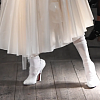 John Galliano and Christian Louboutin created the Tabi collection for Maison Margiela
Maison Margiela creative director John Galliano and French shoe designer Christian Louboutin released a shoe collaboration that was included in the Maison Margiela Artisanal spring 2024 couture collection. The design duo created six versions of the Tabi shoe. All shoe models in the collection have a split toe - a characteristic touch of the signature Tabi shoe model of the Maison Margiela brand. And Christian Louboutin gave the shoe its signature red sole.
John Galliano and Christian Louboutin created the Tabi collection for Maison Margiela
Maison Margiela creative director John Galliano and French shoe designer Christian Louboutin released a shoe collaboration that was included in the Maison Margiela Artisanal spring 2024 couture collection. The design duo created six versions of the Tabi shoe. All shoe models in the collection have a split toe - a characteristic touch of the signature Tabi shoe model of the Maison Margiela brand. And Christian Louboutin gave the shoe its signature red sole.
 Why Rendez-Vous and Yandex Lavka released a “bread bag”
Shoe retailer Rendez-Vous announced the launch of a spring collaboration with Yandex Lavka and released a roll that resembles the shape of a woman’s handbag. This “Bread Bag” is presented in the Yandex.Lavka application at a price of 249 rubles. On the product packaging there is a promotional code for 1000 rubles, which can be spent in the Rendez-Vous network.
Why Rendez-Vous and Yandex Lavka released a “bread bag”
Shoe retailer Rendez-Vous announced the launch of a spring collaboration with Yandex Lavka and released a roll that resembles the shape of a woman’s handbag. This “Bread Bag” is presented in the Yandex.Lavka application at a price of 249 rubles. On the product packaging there is a promotional code for 1000 rubles, which can be spent in the Rendez-Vous network.
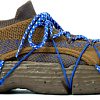 Camper has released innovative sneakers - designers
Spanish brand Camper's new Roku sneaker features six interchangeable components to create up to 64 different looks and color combinations. Roku means "six" in Japanese.
Camper has released innovative sneakers - designers
Spanish brand Camper's new Roku sneaker features six interchangeable components to create up to 64 different looks and color combinations. Roku means "six" in Japanese.
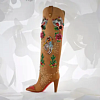 Christian Louboutin presented a collection in a cowboy style
At the Loubi Show in Paris, the French luxury brand Christian Louboutin presented its fall 2024 collection, following the trend - in the style of the Wild West. It included cowboy boots and rhinestone loafers.
Christian Louboutin presented a collection in a cowboy style
At the Loubi Show in Paris, the French luxury brand Christian Louboutin presented its fall 2024 collection, following the trend - in the style of the Wild West. It included cowboy boots and rhinestone loafers.
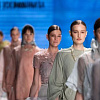 Fashion Week takes place in Moscow
Fashion Week takes place in the Russian capital. Events include fashion shows, markets where you can purchase clothes, bags and accessories, and a B2B Showroom for fashion industry professionals.
Fashion Week takes place in Moscow
Fashion Week takes place in the Russian capital. Events include fashion shows, markets where you can purchase clothes, bags and accessories, and a B2B Showroom for fashion industry professionals.
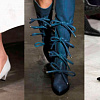 Fashion trends Fall-Winter 2023/24 for commercial footwear purchases
Permanent contributor to Shoes Report. Elena Vinogradova, an expert in sales and purchases in the fashion business, prepared an overview of the trends for the autumn-winter 2023/24 season especially for us.
Fashion trends Fall-Winter 2023/24 for commercial footwear purchases
Permanent contributor to Shoes Report. Elena Vinogradova, an expert in sales and purchases in the fashion business, prepared an overview of the trends for the autumn-winter 2023/24 season especially for us.
 MSCHF and Crocs launch "Big Yellow Boots"
Creator of the Big Red Boots, Brooklyn brand MSCHF has teamed up with American plastic clog and sandal brand Crocs for another oversized shoe. The new Big Yellow Boots will go on sale on August 9th.
MSCHF and Crocs launch "Big Yellow Boots"
Creator of the Big Red Boots, Brooklyn brand MSCHF has teamed up with American plastic clog and sandal brand Crocs for another oversized shoe. The new Big Yellow Boots will go on sale on August 9th.
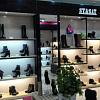 Five rules of professional lighting for a shoe store - something that is relevant in any season
When developing a lighting concept for shoe retailers, it is important to take into account not only the history of the brand, the architectural content of the premises, the target audience of the stores, but also the seasonality of the goods. With the onset of the cold season, client preferences change: bright weightless shoes are replaced by more massive models in discreet dark colors. Despite significant differences in summer and winter collections, the overall philosophy of the brand, its recognition should remain unchanged at any time of the year. Tatyana Ryzhova, an SR lighting expert in fashion retail, has identified five basic rules for a competent lighting concept for a shoe store for readers of the magazine, which will help to present winter assortment to customers in a winning way.
Five rules of professional lighting for a shoe store - something that is relevant in any season
When developing a lighting concept for shoe retailers, it is important to take into account not only the history of the brand, the architectural content of the premises, the target audience of the stores, but also the seasonality of the goods. With the onset of the cold season, client preferences change: bright weightless shoes are replaced by more massive models in discreet dark colors. Despite significant differences in summer and winter collections, the overall philosophy of the brand, its recognition should remain unchanged at any time of the year. Tatyana Ryzhova, an SR lighting expert in fashion retail, has identified five basic rules for a competent lighting concept for a shoe store for readers of the magazine, which will help to present winter assortment to customers in a winning way.
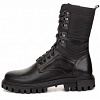 Bertsy: what to look for when choosing a model
Bertsy and tactical boots are becoming more and more relevant footwear, and not only because of the start of the hunting season. In Russia, there are several dozen enterprises producing this type of footwear. Oleg Tereshin, Deputy Chief Technologist of ZENDEN, told Shoes Report about the differences and features of ankle boots and what you should pay attention to when buying them in specialized retail and online.
Bertsy: what to look for when choosing a model
Bertsy and tactical boots are becoming more and more relevant footwear, and not only because of the start of the hunting season. In Russia, there are several dozen enterprises producing this type of footwear. Oleg Tereshin, Deputy Chief Technologist of ZENDEN, told Shoes Report about the differences and features of ankle boots and what you should pay attention to when buying them in specialized retail and online.
 I doubt and object: how to find an approach to difficult clients?
How good and serene would be the work of a salesperson if the customers were calm, cheerful, always knew exactly what they wanted, and bought, bought, bought! It is a pity that this is possible only in dreams. Therefore, we will not dream, but we will act. Together with Maria Gerasimenko, a permanent author of SR, we understand the doubts and objections of buyers and build a strategy for working with them. Our expert pays special attention to the two main objections of buyers, on which 82% of sales are lost.
I doubt and object: how to find an approach to difficult clients?
How good and serene would be the work of a salesperson if the customers were calm, cheerful, always knew exactly what they wanted, and bought, bought, bought! It is a pity that this is possible only in dreams. Therefore, we will not dream, but we will act. Together with Maria Gerasimenko, a permanent author of SR, we understand the doubts and objections of buyers and build a strategy for working with them. Our expert pays special attention to the two main objections of buyers, on which 82% of sales are lost.
 EURO SHOES presents an updated section of the GLOBAL SHOES exhibition with collections of shoe and bag brands from Asian countries
EURO SHOES premiere collection is expanding. Along with the traditional pool of leading European footwear brands from Germany, Spain, Italy and Turkey, several dozen footwear and bag brands from the Middle Kingdom will be presented in the GLOBAL SHOES section at the Moscow Expocentre from August 29 to September 1.
EURO SHOES presents an updated section of the GLOBAL SHOES exhibition with collections of shoe and bag brands from Asian countries
EURO SHOES premiere collection is expanding. Along with the traditional pool of leading European footwear brands from Germany, Spain, Italy and Turkey, several dozen footwear and bag brands from the Middle Kingdom will be presented in the GLOBAL SHOES section at the Moscow Expocentre from August 29 to September 1.
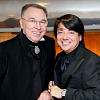 Two prominent Russian fashion designers Vyacheslav Zaitsev and Valentin Yudashkin passed away
One after another, two days apart, Vyacheslav Zaitsev and Valentin Yudashkin, outstanding fashion designers, whose work for the whole world was a kind of hallmark of fashionable Russia, left this world.
Two prominent Russian fashion designers Vyacheslav Zaitsev and Valentin Yudashkin passed away
One after another, two days apart, Vyacheslav Zaitsev and Valentin Yudashkin, outstanding fashion designers, whose work for the whole world was a kind of hallmark of fashionable Russia, left this world.
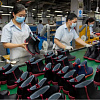 World Footwear Yearbook: Global footwear production reaches 23,9 billion pairs and is back to pre-pandemic levels
The Portuguese association of shoe manufacturers APICCAPS published the 13th edition of the international statistical bulletin World Footwear Yearbook for 2023, according to which in 2022 the production and export of shoes worldwide increased by 7,6% and 9%, respectively, and the world production of shoes reached 23,9 billion couples and returned to pre-pandemic levels.
World Footwear Yearbook: Global footwear production reaches 23,9 billion pairs and is back to pre-pandemic levels
The Portuguese association of shoe manufacturers APICCAPS published the 13th edition of the international statistical bulletin World Footwear Yearbook for 2023, according to which in 2022 the production and export of shoes worldwide increased by 7,6% and 9%, respectively, and the world production of shoes reached 23,9 billion couples and returned to pre-pandemic levels.
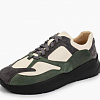 Rostov footwear brand Novak presented a collection of sneakers and sneakers
In the spring-summer 2023 season, the Rostov-on-Don shoe brand Novak presented a cute collection of sneakers and sneakers for every day. The upper of the shoe is made of genuine leather, suede, nubuck, the sole is made of light EVA.
Rostov footwear brand Novak presented a collection of sneakers and sneakers
In the spring-summer 2023 season, the Rostov-on-Don shoe brand Novak presented a cute collection of sneakers and sneakers for every day. The upper of the shoe is made of genuine leather, suede, nubuck, the sole is made of light EVA.
 How to create selling visual content for online based on the identified unique selling proposition?
What is a USP (unique selling proposition) and what is it for? Why is the USP creation service in great demand among fashion retailers today? How to create a working USP? Answers questions and provides step-by-step guidance on how to define your unique selling proposition and work with it to increase online sales, Tatyana Vasilyeva, an SR expert in the promotion and development of fashion brands.
How to create selling visual content for online based on the identified unique selling proposition?
What is a USP (unique selling proposition) and what is it for? Why is the USP creation service in great demand among fashion retailers today? How to create a working USP? Answers questions and provides step-by-step guidance on how to define your unique selling proposition and work with it to increase online sales, Tatyana Vasilyeva, an SR expert in the promotion and development of fashion brands.
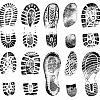 Shoe educational program: what shoe soles are made of
“What is the difference between TEP and EVA? What does tunit promise me? Is PVC glue? What is the sole of these shoes made of? ”- the modern buyer wants to know everything. In order not to smash his face in front of him and be able to explain whether such a sole suits him in soles, carefully read this article. In it, process engineer Igor Okorokov tells what materials the soles of shoes are made of and what makes each of them so good.
Shoe educational program: what shoe soles are made of
“What is the difference between TEP and EVA? What does tunit promise me? Is PVC glue? What is the sole of these shoes made of? ”- the modern buyer wants to know everything. In order not to smash his face in front of him and be able to explain whether such a sole suits him in soles, carefully read this article. In it, process engineer Igor Okorokov tells what materials the soles of shoes are made of and what makes each of them so good.
 How to set prices that will earn
Some businessmen still confuse the concept of margin with the concept of trade margins and set prices for their goods, guided solely by the example of competitors. No wonder they go broke! Analyst at the Academy of Retail Technologies Maxim Gorshkov gives several tips and formulas with which you can set not only ruinous, but also profitable prices.
How to set prices that will earn
Some businessmen still confuse the concept of margin with the concept of trade margins and set prices for their goods, guided solely by the example of competitors. No wonder they go broke! Analyst at the Academy of Retail Technologies Maxim Gorshkov gives several tips and formulas with which you can set not only ruinous, but also profitable prices.
 Sales of shoes and accessories: effective techniques for business rhetoric
Which speech modules are effective in communicating with potential and current customers of shoe stores, and which are not, Anna Bocharova, a business consultant, knows.
Sales of shoes and accessories: effective techniques for business rhetoric
Which speech modules are effective in communicating with potential and current customers of shoe stores, and which are not, Anna Bocharova, a business consultant, knows.
 We form the salary of sellers: expert advice
“How do you charge your consultants for personal or general sales?” Is one of the most popular questions causing a lot of controversy and gossip on the online forums of retail business owners. Indeed, how to properly form the earnings of sellers? But what about bonuses, where to get a sales plan from, do employees allow them to buy goods at discounted stores? In search of truth, the Shoes Report turned to a dozen shoe retailers, but no company wanted to disclose its motivation system - the process of its development was too complicated and individual. Then we asked four business consultants, and finally became convinced that the topic of seller motivation is very complex, because even our experts could not come to a common opinion.
We form the salary of sellers: expert advice
“How do you charge your consultants for personal or general sales?” Is one of the most popular questions causing a lot of controversy and gossip on the online forums of retail business owners. Indeed, how to properly form the earnings of sellers? But what about bonuses, where to get a sales plan from, do employees allow them to buy goods at discounted stores? In search of truth, the Shoes Report turned to a dozen shoe retailers, but no company wanted to disclose its motivation system - the process of its development was too complicated and individual. Then we asked four business consultants, and finally became convinced that the topic of seller motivation is very complex, because even our experts could not come to a common opinion.
 The whole truth about Bayer. Who is he and how to become one?
Bayer is no longer a new, but still a popular and sought-after profession. It’s fashionable to be a buyer. Buyers are at the origins of the emergence and development of trends. If the designer offers his vision of fashion in the season, then the buyer selects the most interesting commercial ideas. It is on buyers that the policy of sales of stores and what, in the end, the buyer will wear depends on. This profession is surrounded by a magical fleur, often associated with a lack of understanding of what exactly is the work of a buyer.
The whole truth about Bayer. Who is he and how to become one?
Bayer is no longer a new, but still a popular and sought-after profession. It’s fashionable to be a buyer. Buyers are at the origins of the emergence and development of trends. If the designer offers his vision of fashion in the season, then the buyer selects the most interesting commercial ideas. It is on buyers that the policy of sales of stores and what, in the end, the buyer will wear depends on. This profession is surrounded by a magical fleur, often associated with a lack of understanding of what exactly is the work of a buyer.
 Technology Selling Issues
There is nothing worse than meeting the buyer with the words “Hello, can I help you with something?”, Because the seller works in the store just to help. Criticizing this well-established pattern of communication with the buyer, Andrei Chirkarev, business coach for effective sales and the founder of the New Economy project, shares the technology of truly selling issues with readers of Shoes Report.
Technology Selling Issues
There is nothing worse than meeting the buyer with the words “Hello, can I help you with something?”, Because the seller works in the store just to help. Criticizing this well-established pattern of communication with the buyer, Andrei Chirkarev, business coach for effective sales and the founder of the New Economy project, shares the technology of truly selling issues with readers of Shoes Report.
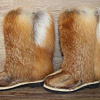 Fur, and not only: types of lining
In the production of winter footwear, various materials are used that are designed to retain heat and meet the requirements of consumers: natural sheepleather, artificial fur, artificial fur from natural wool and others. All types of lining fur have their own advantages and disadvantages. Let's consider the properties of each of them.
Fur, and not only: types of lining
In the production of winter footwear, various materials are used that are designed to retain heat and meet the requirements of consumers: natural sheepleather, artificial fur, artificial fur from natural wool and others. All types of lining fur have their own advantages and disadvantages. Let's consider the properties of each of them.
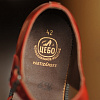 The best models of Czech shoes of the past
In Soviet times, for shoes from Czechoslovakia sold under the Cebo brand, customers stood in line for four hours and did not regret it, because Czech shoes were considered to be of high quality, comfortable and fashionable. Shoe designer Juraj Shushka shared a photo archive of his collection with Shoes Report magazine, which contains the most interesting Cebo models from the 1940's to the 1980's.
The best models of Czech shoes of the past
In Soviet times, for shoes from Czechoslovakia sold under the Cebo brand, customers stood in line for four hours and did not regret it, because Czech shoes were considered to be of high quality, comfortable and fashionable. Shoe designer Juraj Shushka shared a photo archive of his collection with Shoes Report magazine, which contains the most interesting Cebo models from the 1940's to the 1980's.
 Retail Arithmetic
Before you begin to solve specific problems, you need to find out how accurately all the leaders of your company understand the basic terminology of retail.
Retail Arithmetic
Before you begin to solve specific problems, you need to find out how accurately all the leaders of your company understand the basic terminology of retail.
 How to fire a worker without tears, scandal and trial
Sooner or later, any manager is faced with the need to part with an employee. Properly and on time the dismissal procedure will save the company money, and the boss himself - nerves and time. But why sometimes, knowing that a break in relations is inevitable, we put off the decision for months?
How to fire a worker without tears, scandal and trial
Sooner or later, any manager is faced with the need to part with an employee. Properly and on time the dismissal procedure will save the company money, and the boss himself - nerves and time. But why sometimes, knowing that a break in relations is inevitable, we put off the decision for months?